Tennessee Mountain Stories

Tennessee Post Offices

wOLF rIVER POST OFFICE, fENTRESS cOUNTY, tn

wOLF rIVER POST OFFICE, fENTRESS cOUNTY, tn

I found the most exciting webpage recently and I am really happy to share it with you here.  The Tennessee State Library and Archives has a lot of information published online and this particular page lists all of the post offices in Tennessee as well as the dates when they were opened and closed. 

There is so much information within the six thousand lines of data that I hardly know where to begin.  I’ll focus on the plateau counties and share a few things I noticed there.

Fentress County currently has six active post offices in Allardt, Clarkrange, Grimsely, Jamestown, Pall Mall and Wilder.  However, there have been fifty-eight post offices in the county since the Jamestown office was opened in 1827; Jamestown was the first post office according to this list.

I am plagued by the “why” question and I can’t help but ask that of these rural post offices.  One reader last week questioned if I was sure that there were post offices located both in Roslin and Banner Springs.  It’s a very good question for I frankly couldn’t tell you the difference between the two.  The same is true on the far north end of the county where both Pall Mall and Wolf River had post offices during the years 1928 – 1957.  There was even an Alvinyork (no space between the names) for one year in 1923.  While the list doesn’t tell me where Alvinyork, TN was located, I’m imagining it was in the Wolf River area since that’s where the property granted to him was located, although the library’s list doesn’t give any finer location than the county.   I keep wondering why post offices were placed in these particular locations.

There were, in fact, five post offices in Fentress County that were opened one year or less:  Alvinyork, Beauty,  Doubletop  (this one is reported by the State Library as “Doubletod” but I feel like that “d” is an error), Gooding and Haggard.  We know that due to mobility issues, post offices were opened where a large concentration of people would be located, even if it was a transient location.  The Henlopen Coal Mines post office is a prime example.  I sure hope one of you wise readers can shed some light on that particular location as I’ve never heard of that particular mine.  Mail delivered from this location for four years from 1831 until 1835.  That was no doubt the life of the coal seam and when the miners moved on they took the post office with them.  Wilder still has a post office which was opened in 1902 which closely corresponds to the beginning of the coal mine boom  there around 1900.  Nearby mining town Crawford’s post office also opened in 1902 while Davidson got their own office in 1910, Twinton in 1919.  With the mines long since closed, only Wilder and Crawford still have post offices.
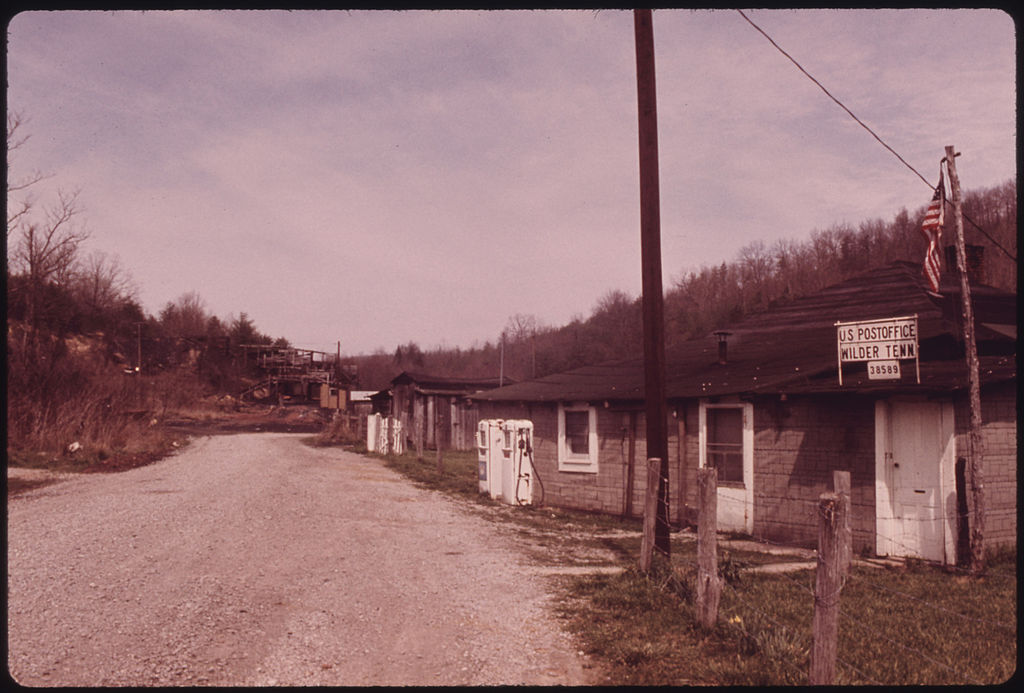
Wilder Post office, Fentress County, TN

Wilder Post office, Fentress County, TN

The other major industry in Fentress County historically is timber.  As a large tract opened, a little boom town would form around it.  I suspect that some of the post offices on the list were associated with timber operations and one of the reasons I believe that is they appear to be named for people.   Haggard (1833 – 1834), Keese (1889 – 1901), Oporto (1833 – 1838), and Rodes (1889 – 1911) are a that look like surnames and are not communities I’ve ever heard of in the county. 

Communities want to hold onto their post office as long as possible.  The general store was often the site of the post office as well – the original one-stop shopping experience.  In the case of the Roslin post office, the store closed down and was re-purposed as a neighborhood library while the post office remained open in the same location. 

Many of the post offices were closed through the 1940’s to 1960’s when increasing mobility eliminated the need for post offices to be located in very small communities.  Also, the postal service established a permanent policy of rural mail delivery in 1902; as those routes expanded to reach the rural Cumberland Plateau, the post offices could be more centralized.

In today’s digital world, the post office seems somehow nostalgic.  We no longer write letters to family and friends inquiring about their families and sharing all of our news.  We no longer have to wait days or weeks to hear news , whether joyful or tragic.  But don’t we all enjoy getting a little note in our mailbox from a friend we haven’t seen in far too long?  Isn’t that like a little forty-nine-cent gift? 

I can’t help but imagine stopping in at the general store to pick up a few necessities that we couldn’t produce ourselves and hearing the storekeeper say, “I think there’s a letter for you.”  You open the letter right there and share the news with the neighbors who happen to be in the store.  In this way, news is disseminated throughout the community in true grapevine fashion.

You know, I think I’m going to write someone a letter right now!


A Sense of Community

As I began writing today’s article I realized this might be a good time to share an upcoming plan with you.  You may recall about a year ago I published a novella here one chapter each week.  A lot of you told me that you enjoyed it and so I would like to share it with readers beyond the scope of this blog.  Therefore, I’m in the process of editing it for publication as an ebook on Amazon.  I hope to have it ready by summer’s end and will be asking you to both download a free copy and to ask all of your friends to do so as well.   Then, I hope you will write a review of the book and let me and other readers know why you liked it.  There’ll be lots more details on this in coming weeks.

I firmly believe the key to good writing is to ‘write what you know’.  Understanding this, you aren’t surprised that my books are largely set in the places I know and love – the little communities of the Cumberland Plateau.  And the fictional characters I write about are invariably inspired by the people around me, or those who have gone before me.  I’ve told you many times how blessed I count myself to hail from a region with such a rich oral history.  Additionally, I have enjoyed a very large, extended family that has shared details about many generations.

Still, this week I found myself searching for a community name.  I want to create a character inspired by one of my great grandparents and would like to name her hometown.  As I questioned family members, all they could give me was “near Monterey”.  Now, today, we often use the name of the nearest notable town for general statements – for years I’ve explained my hometown as “halfway between Nashville and Knoxville” for the many people who have no idea where Clarkrange lies.  That’s a pretty broad statement, but unless you’re placing a mail-order it’s really all most people want to know.

Communities were different a hundred years ago, and my great grandmother was born one hundred twenty-four years ago.  (Keeping those times in perspective is a whole other story!)  In her day, I would probably never have said I’m from Clarkrange.  I would have always drilled down to the actual neighborhood of Martha Washington.  There was a sense of identity in being from Martha Washington that was very different than calling Clarkrange your home. 

We are so much more mobile now that it’s easy to think of a place that’s actually five, ten or even fifteen miles from your actual house as your home.  While I can imagine what it would be like to walk or ride a horse if I needed to go to Peter’s store or to the school in Clarkrange, I’m not at all sure that I can truly appreciate how confined I might have been to a much smaller geographic area.  My grandfather once said that we could run to Nashville more easily than his mother could get to Clarkrange.  Seems impossible, doesn’t it?  But I have to believe he was closer to that day, even if he was born fifteen years after Ford’s Model A went into production. 

I can’t help but wonder how often people ventured out to Clarkrange in 1900.  While Banner Springs  had it’s own post office at that time, neither Campground nor Martha Washington ever enjoyed such a luxury.  Even Lovejoy ten miles to the west had a post office until 1897.  And business always had to be conducted from time to time at the courthouse in Jamestown.  However, the demands of a mule-powered farm and a large family surely kept those trips to a minimum.

Do you think that this sense of citizenship in the community went beyond mere mobility?  While visiting the Cherokee village in North Carolina a few years ago, one of the exhibitioners answered a question about gender-roles and he responded that the people were satisfied with their roles, they didn’t question them as we do today.  Perhaps the same applies to the sense of community the Appalachian people enjoy.  This was home – it’s where you family is, it’s where you worship, it’s where you work.  What else is there?

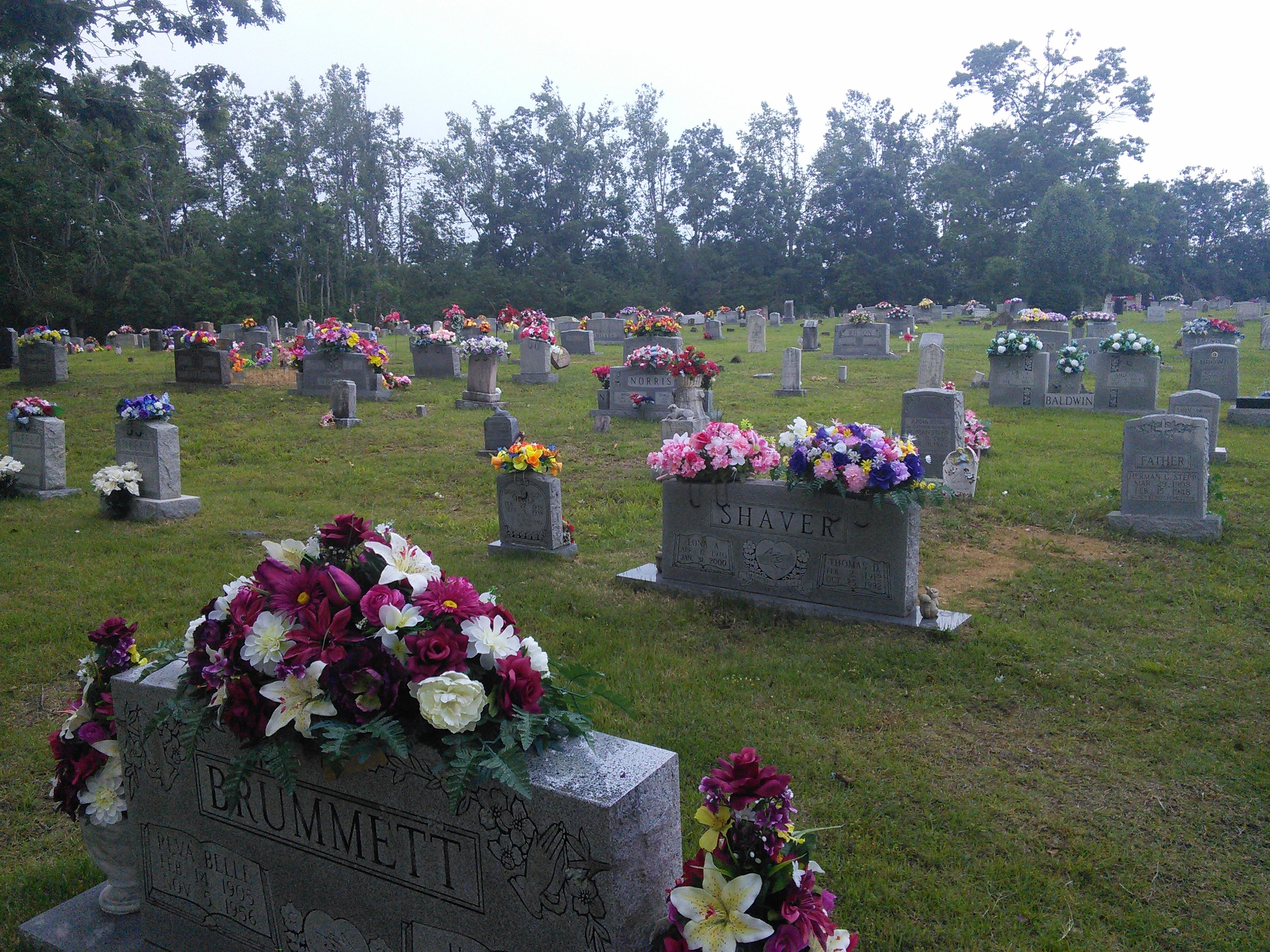
Excepting the occasional wandering pioneer, families often spent generations without venturing very far from their home communities.  We can see this when we walk through the cemetery and see several generations buried almost side-by-side.  We have numerous farms on the plateau that are now being labelled “century farms” because they’ve been in the same family for over one hundred years.  Those are really deep roots and I think that gives a sense of belonging that we are losing in our world today. 

Those roots still anchor many of us to the plateau, no matter where we get our mail today.  That sense of family and community is very real at family reunions, decorations, even weddings and funerals that bring us all back together.  I don’t know if the sense of community I feel in all of the old stories is specific to the time or the place but I’m sure it’s an appreciation we could all benefit from today.

In the case of my great-grandmother who grew up “somewhere near Monterey”, we’ve discussed here before the thriving town that Monterey was at the turn of the twentieth century.  The surrounding communities would have certainly benefited from that booming economy, but their little villages would have had a very different atmosphere than that railroad and resort town.  So I don’t know why my great grandmother never passed along the name of the community she grew up in.  Maybe I simply haven’t asked the right person – or maybe those that knew are already gone.  Realizing that we lack this little fact makes me realize what a deficiency there is in my understanding of this woman.  And it makes me truly appreciate the family members about whom I know so much.

Why we celebrate Decoration Day

This past Sunday was Decoration Day at Campground Cemetery.  We’ve talked about this holiday here before and we will probably visit it again because it’s been a staple of my family memories over the years. 

If you didn’t grow up with the tradition of Decoration Day, it may be hard to understand why people would get dressed up and spend a hot summer day wandering around a cemetery.  Yet, if you were raised on it, Decoration Day is as normal as Thanksgiving or Christmas.  Someone asked me this week, “Why?”.  You can bet I had an answer.

Remember!  That’s the real reason why we celebrate Decoration Day.  We need to remember our ancestors.  I so much want my children to know where they came from.  I want them to know the struggles those people went through and even the mistakes they made.  I want them to rejoice in the successes and the joys.  It is our heritage. 

Many times I’ve heard the story of my great-grandmother making her decoration flowers – in her day everyone decorated with homemade crepe-paper flowers.  She purposely made a lot of extras.  On Sunday evening after everyone had placed their flowers on their loved ones’ graves, she returned to the cemetery and placed one or two little flowers on each grave that had received none. 

Do you realize the sacrifice she made for complete strangers?  Many of those graves have only plain stones and the names of the occupants are long since forgotten.  Yet, she felt such a need to memorialize them that she gave of her very limited resources – both her time and her money – to show that they were remembered in some way.

As Daddy reminded me of this story last Sunday, I commented that there are many more graves today than there were fifty years ago.  He pointed out that there’s an awful lot more without flowers too.  Now I’m not saying if you didn’t stick some colored plastic on a rock this weekend that you’ve completely forgotten your history and your heritage.  And I do realize I’m ‘preaching to the choir’ since you are taking the time to read a history blog.  Still I have to ask, are we remembering?

On Decoration Day you can see neighbors that you haven’t seen in months and pass a quick hello or share a nearly forgotten memory.  Someone might tell a story and you’ll learn about families that you never had a chance to meet.  We comment on how old or how young people were when they passed away and we wish they could see us now.  And yes, we mourn a bit – even as years pass, there are some graves that always bring a tear for they are still sorely missed.

I know my family from these walks through the cemetery.  Of my eight great-grandparents, three passed away before I was born, and three more died while I was really too young to remember them.  Yet I’ve heard the stories and I feel that I know them.  A couple of weeks ago I shared with you my great-grandmother’s china cabinet; one of my older cousins visited recently and he remembered it being in her house.  I never saw that and yet I feel a connection to her and value the piece because of it.  That connection only comes from remembering – from family continuing to remember.

The good news here is that you don’t have to wait until Decoration Day next year, you don’t even have to drive to the cemetery.  Plan a family reunion or just sit down with your kids, grandkids or nieces and nephews to tell them a story.  Tell a story you told last year or last month; it is the repetition that really cements the stories in our memories. 

Do they sigh and say, “You know you’ve told me this a hundred times?”

Feel free to remind them, “I want to hear it again myself.”


3/3/2016 UPDATE
I just read a very interesting passage in The Land of Saddle-bags by James Watt Raine and I wanted to share it verbatim here.

"Another custom peculiar to the Mountain People is the 'decorating' of burial grounds, a community celebration which has no apparent connection with the well-known memorial services for old soldiers.  It is celebrated on any date convenient for the locality.  The preceding day men meet at the cemetery to mow the briers, cut down the brush, and clean out the fence corners around the graves.  The next day the people bring flowers to decorate all the graves.  This done, the choir, having practiced for the occasion, singes the old familiar hymns, and if ambitious, renders something resembling an anthem.  If a preacher is present, of course he 'improves' the occasion."


Home is Where the Heart Is

In the garden of Eden, God created the ultimate paradise.  Adam and Eve didn't have houses like we do today, but neither did they have snow, rain, thunderstorms or any of the creepy crawlies that we try to bar from our homes.  They could walk out and pet any kind of animal from bison to lion, kangaroos or polar bears.  Yet in everything that God created in those first six days, only into mankind did he breathe life.


I say all of that to stress that I value life above any kind of stuff.  Still, I’m surrounded by a pile of junk that to me are priceless treasures.  For the last few weeks we've been talking about historic houses and we've visited six that hold innumerable memories and I certainly wish those houses could whisper to me just a few of their secrets.


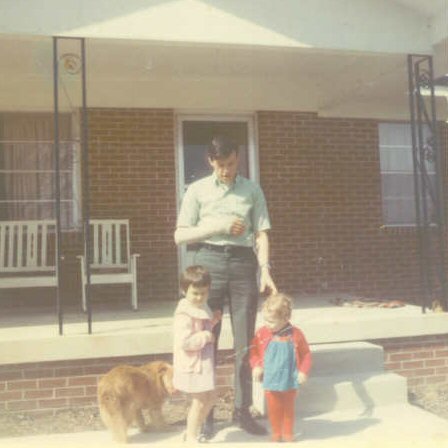
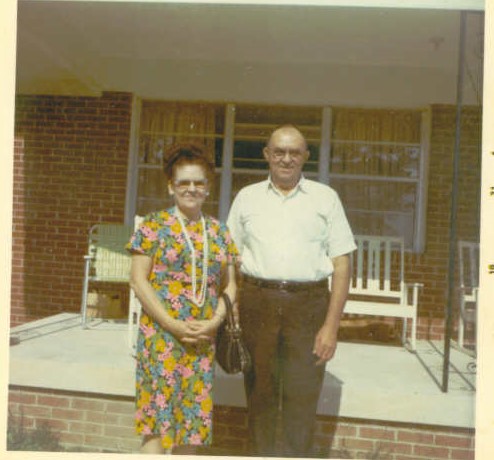
It seems we have a picture of every member of the family standing on the front porch of my grandparents' house.

It seems we have a picture of every member of the family standing on the front porch of my grandparents' house.

Almost nine years ago, my family suffered a devastating blow when my grandmother's house burned, and she passed away from injuries sustained in that fire.  It was hard to lose this woman who meant so much to so many people.  Somehow, Grandma had been a lighthouse - always steadily lighting the way back home for both her immediate and extended family.  But we knew that her soul was carried home to heaven on that windy October night.  Certainly we will always miss her but we rejoice that we will be reunited with her one day.


The house was a totally different kind of loss.  It wasn't one of the centuries-old houses that we've talked about in this blog.  Instead, it was a 1960's brick rancher with faux-wood panelling and aluminum windows that were fogged by leaking seals.  It was spacious but certainly not grand.  And from the day it was built, it was the gathering place for generations of family.  Grandma's house didn't have so many years of memories etched into the walls but it had hosted countless hours of laughter and not a few tears.  Whether it was a day of joy or sadness, there was a comfort to be found inside Grandma's house. 


I know many of you have a home that you will remember with the same fondness.  Maybe some of those houses are still standing and you can look to them as the historic homes we’ve been visiting.  If you read the comments to last week’s story, one lady wrote about her grandparent’s homestead house and the precious memories she has of that house. 


All of those houses are the ones that I wanted to mention this week.  We always say that 'home is where the heart is' and that is certainly true.  Home is kith and kin; it is anywhere God builds a family and gives them refuge.  And the memories that I've been wishing all of these aged walls could relinquish, are ultimately carried in the hearts of those families.


One of the blessings my own family has given me is a very rich oral history.  We have stories!  We have told our stories - again and again.  I'm honored to be able to share some of our stories with you through this blog and through my books.  So that awful fire stole only brick and mortar; the joys that those walls held live on in my heart and in the hearts of aunts, uncles, cousins, neighbors and friends.  What a blessing that is!


I'm always eager to hear your stories too.  That's why nearly every week I point you to the comments section below.  Anytime one of my blogs speaks to you, I hope you will share it there and share the memories that surfaced as you were reading.

Cumberland Homesteads

No discussion of historic homes on The Cumberland Plateau would be complete without a mention of The Homesteads.  Much has been written about this program, and I’ll try to provide some links at the end if you want to know more.  They are lovely homes and I stopped by the Homestead House Museum to get a look inside.

Between 1934 and 1938, two hundred-fifty homesteads were built just south of Crossville, Tennessee.  One of President Roosevelt’s New Deal programs, The Cumberland Homesteads was just one of dozens of Roosevelt towns.  The original vision was a village surrounded by twenty to thirty acre farms which would serve to house and educate a starving Appalachian populace.  While they left a series of picturesque farms, the program itself wasn’t overly successful.

The government believed that the mountain people were in distress due to ignorance and if they could educate these people then their poverty would disappear.  Therefore, the families who acquired these properties signed on to a rigorous program that required them to report their every action to the overseers.  Those directors would tell the farmers what would be planted (and when) in each field they tilled.  Not surprisingly, the independent mountaineers did not take to this plan very readily. 

There was constant turn-over and after just four years the funding was ended and the homesteads given over to those farmers who could secure independent financing to pay off the loan.  Sadly, the families had not been given a final price when they began the program; they were simply told they would work a certain number of hours and make a certain monthly payment.  The acceptance of these terms no doubt speaks to the desperate economic condition for none of us would agree to them now, would we?

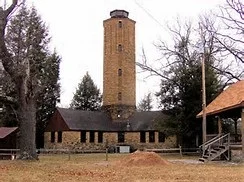
A wood-framed village was erected to support the logistics of the building but this was demolished in preparation for a permanent downtown which was never completed.  The focal point of the city center would be a tower surrounded by a cross-shaped building.  This was intended to house the administrative offices and in the tower was a water tank topped by a lookout platform.  Fire towers were very common in that day and this platform allowed a clear view of nearly all the homesteads.  Today, Homestead School sits adjacent to the tower, but it was originally located in a wooden structure on another site. 

The homes were built on eleven repeating plans, as well as a few unique plans.  The architect, William Macy Stanton, lived onsite in one of the first and unique homes.  He was responsible for designing not just the floor plans but the farm, roads and community buildings.  The houses were built almost entirely with indigenous materials by both local labor and the homesteaders themselves.  As families arrived, they would initially occupy one of the completed barns and moved into the Crab-Orchard-stone homes as they were finished. 

Inside, the houses have a hand-pumped well in the kitchen that fills a holding tank located in the attic.  Some of the designs allow you to fill a bucket right from the pump while others only allow water access from the actual sink tap.  The houses do have indoor bathrooms, although that was not originally planned.  However, Eleanor Roosevelt, who no doubt enjoyed the indoor plumbing in the White House, felt that everyone should have an indoor bathroom.  Therefore, the architect re-drew his plans, carving out enough space for a small restroom.  The locations of these are interesting because we usually see plans with centrally located plumbing.  However, the bathrooms in these houses are well away from the kitchen, the hand pump, and the holding tank.  In the museum, the bathroom seems to have borrowed space from the dining room and the master bedroom.

The houses are generally three bedrooms, with one being downstairs and two bedrooms located atop a narrow staircase.  The stairs are open in some plans, but the museum’s floor plan has an enclosed staircase that is really quite dark and steep.  The beautiful beaded pine paneling has aged to a golden-red, and the beauty of the local stone is continued inside with fireplaces designed as the center of the living space.  Many of the plans have two chimneys to accommodate both the fireplace and a wood burning cook-stove in the kitchen.

The museum is furnished with 1930’s era furniture – and even vintage clothing in the closets!  The bedrooms are small by our standards today, but the full-sized beds and straight backed chairs are perfectly proportioned for the rooms. 

I visited on a warm and breezy day and while the horizon today is dotted with modern homes, the beauty of the distant mountains remains.  It is easy to imagine rising with the sun to begin a farmer’s day and being greeted by such a landscape.  These families had so little when they arrived from all over the Cumberland Plateau.  These homes would have been mansions compared to the shacks that many left.  In fact, the families did not complain when asked to first live in the new barns – they were new and well-built; the families made do quite nicely in them for a short period of time.

A government agent remained on-site until 1946 and the turn-over of homesteads continued.  As World War II drew to a close, returning veterans were promised priority in getting the homesteads.  This brought in a new wave of families eager to carve out a home and living from The Plateau.

It’s so easy to live right down the road from an amazing piece of history and never really see it first hand.  I want to encourage you to get out and visit The Homestead.  The museum at the tower and the open house both offer a wealth of information.  Even a simple drive through the community is a joy.

Here are a few links if you want to read more about the Homesteada and their history:

Great pictures from the 1930's including original pictures of homestead houses.

www.cumberlandhomesteads.org

www.wikipedia.org/wiki/Cumberland_Homesteads