Tennessee Mountain Stories

The Printed Word

Last week my husband left my bible behind at church and I was without it for a whole week.  I grabbed it up on Sunday and it’s back in the house this week.  It’s rather like having found a lost friend.  But it made me think about the bibles we have in the house – in fact about all of the books that we have.  Our access to the printed word (both traditionally printed on paper and digital works as well) is really overwhelming if you think about it.  And you know that I can never help but make the historical comparison.

IMG_20160510_114706770.jpg

I have a great old heirloom in my home – it is an antique steamer trunk that belonged to my Great Grandpa Key.  His youngest daughter was born in 1931 and she remembered that Grandpa always kept his clothes in that little trunk (reality check number one:  would your entire wardrobe fit in there?).  Also stored in the trunk was the family’s only bible.  She explained that many of the kids had a little testament but Grandma, Grandpa and their eleven children shared the single bible.   She revealed that memory with me as she told how her mother would read where her name, Lois, was mentioned in the bible.  She would go to the trunk, get out the family bible and read to her from Second Timothy 1:5.  The young Lois was sure that her name was mentioned in other places in the bible and she determined when she could read that she would find them.  Her sweet smile as she told me that story is one of those mental snapshots that I can see clearly in my mind’s eye.

I have books stored in that steamer trunk now… it’s chocked full of books!  Books are so cheap for us and so readily available that they seem to multiply on us.  In fact, I have a box in my truck that I keep meaning to take to the used book store to exchange – see, then I’ll have just as many books but different ones! 

Now, the Keys were literate people – which wasn’t terribly common in their generation.  My father remembers his grandpa reading every newspaper he could get his hands on, and he read from front to back.  He studied the trends of the stock market and really seemed to understand it.  Yet, we would have to call him rather ignorant simply because he had no access to the vast collection of written knowledge. 

Lots of people have worked hard to make books available to children; of course, rural locations still struggle with that.  On the mountain, you still have to drive into town to get to a library, and that doesn’t seem very practical if your kids are in school close to home and you are maybe working on the farm.  Some counties have their libraries only open to city residents.  However, I recently discovered that the Tennessee library systems are working to make a digital collection available for free download and that’s pretty exciting as we see the internet in nearly every home these days, even in remote locations.  A love of books is a wonderful gift to give a child.  I’m not sure where I got this love but clearly I did. 

I am not what you would call wealthy – in fact, I’m far, far, far, from it.  Yet, when I make these historical comparisons and realize that books were possessions of very wealthy people in years gone by, I realize how much I really do have.  The ability to read was prestigious and it was often flaunted whenever possible.  In the Victorian era, a parlor would have a table in the center of the room with books upon it as a symbol to any visitors that educated people lived here. 

In mountain families where every hand was needed to scratch from the earth enough food to survive the cold months of winter, the luxury of reading or even learning to read was not to be had.  I’ve been amazed as I’ve worked on genealogical research to find ancestors who accumulated significant land and ran successful businesses yet when I find a land deed I find it signed, “by my mark”.  Of course many of our ancestors could scribble a signature and read a just little bit.  I find that many parents longed for “learning” and because they couldn’t have it themselves, it was a high priority for their children. 

These good ole’ days we recall and study had a lot going for them.  But sometimes I do get a bit of a reality check when I see something like books where we enjoy such great access.  With our social woes and overpopulation, amid growing persecution of Christian people around the world and governments that seem to encroach more of our personal liberties every day, we do enjoy many benefits in this modern world.
Apple Stack Cake

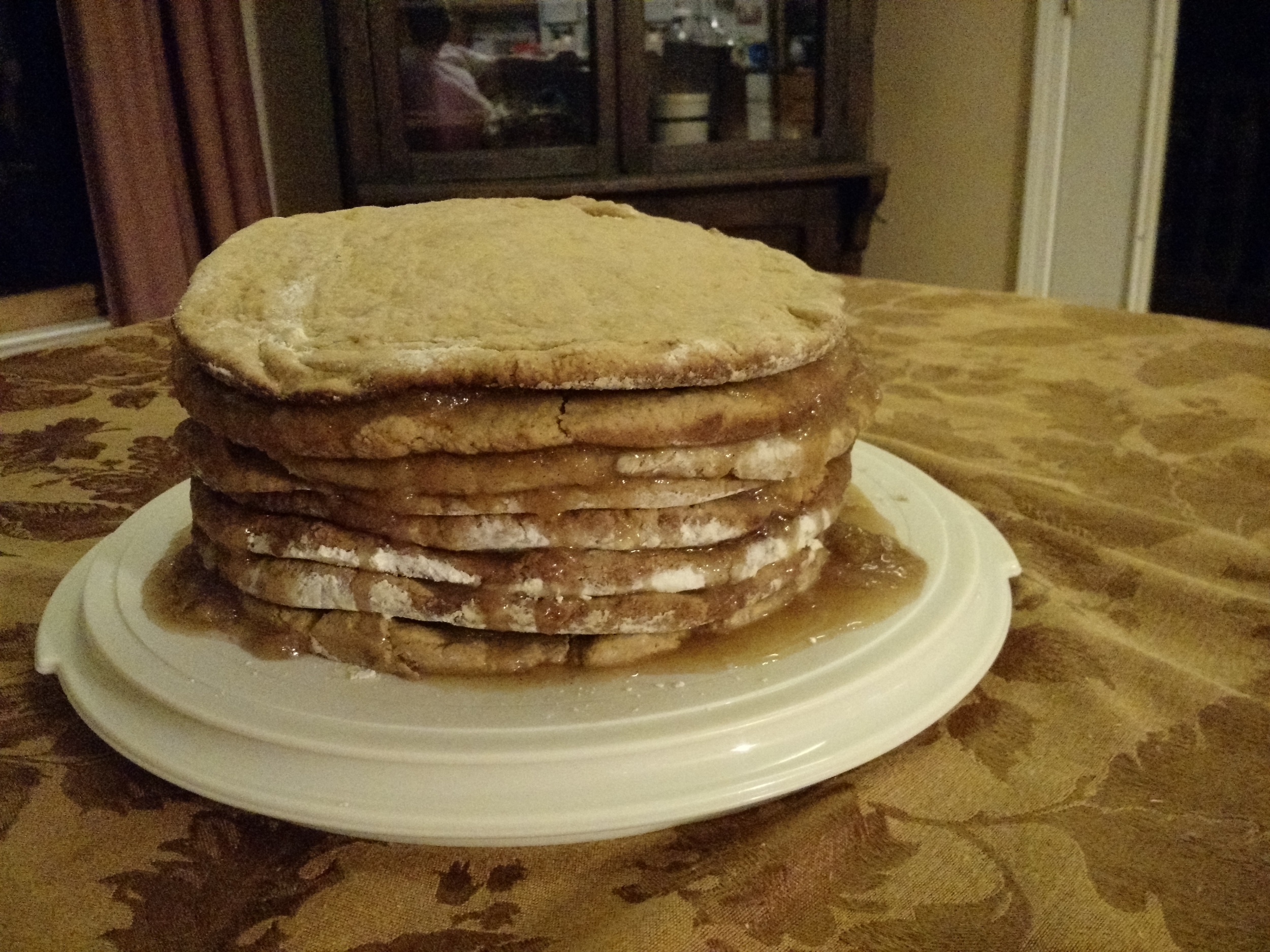
After sharing the story of my delicious failure at boiled icing, one of you treasured readers mentioned Apple Stack Cake and I thought I needed to make one soon.  Now, this rich cake needs people to eat it, so I had to wait for an event and the church homecoming seemed like an ideal time. (We need to talk about homecomings sometime, don’t we?)

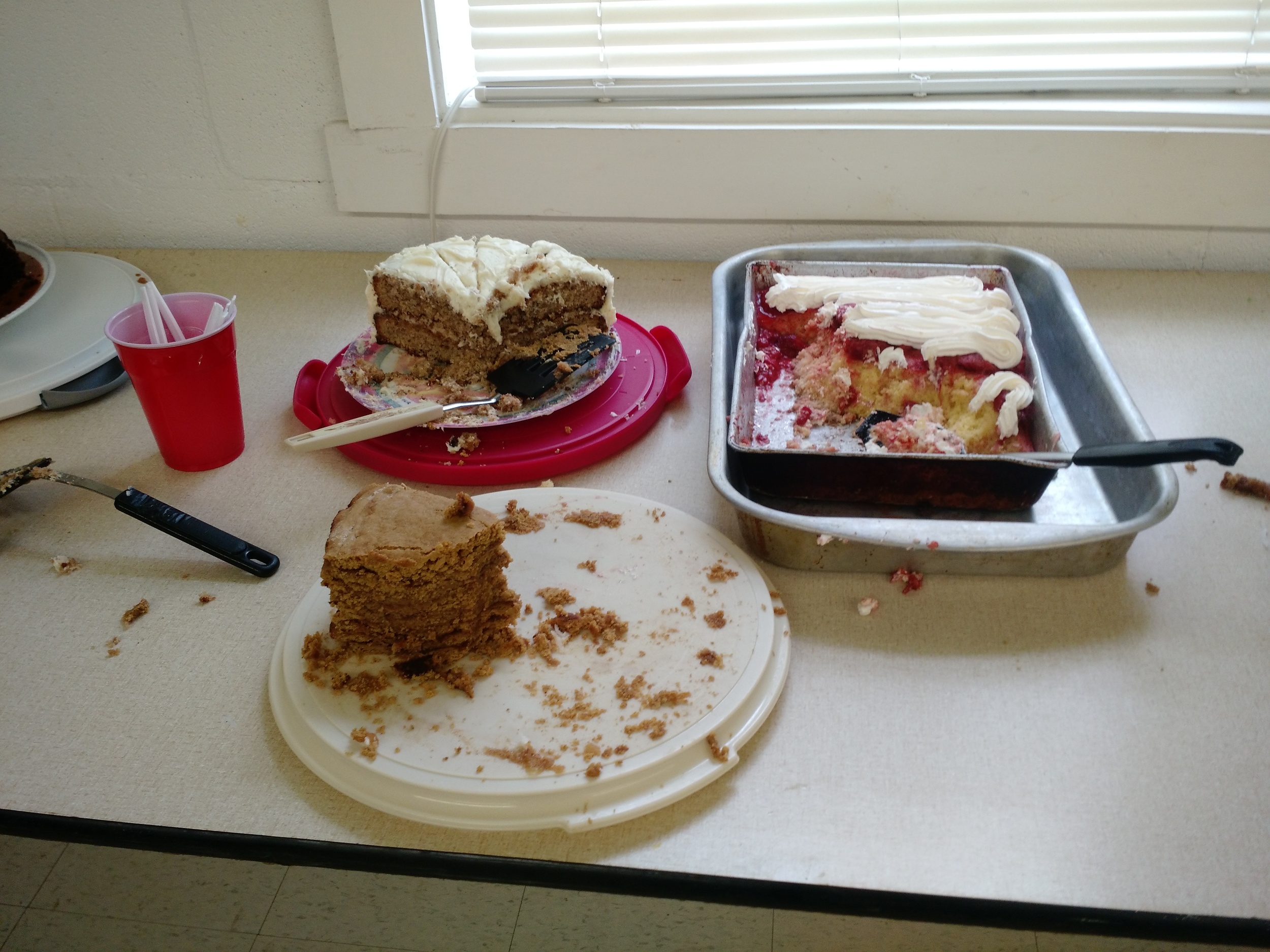
Just between you and me, I’m not a big fan of potlucks and I’ll tell you why.  I cook old fashioned.  Learned from my grannies, loved their cooking and I find again and again I go back to their recipes and their methods.  That’s just fine and my table is often filled, however, my rather homely dishes can’t often compete with brightly colored jello, Cool Whip and canned cake icings.  As a result, I tend to bring a lot of my food back home after a potluck and it’s just a little depressing.  But just for you I made the stack cake and proudly put it on the table amid all those beautiful sweets.

I polled the folks in my little country church and several knew about stack cake and had very fond memories of eating it.  A whole lot of others were brand new to this Appalachian delicacy.  One friend who hales from Texas did not know about it but quickly became a fan.  Another from Michigan had neither eaten nor heard of it but loved it.  She was so surprised that it wasn’t dry.

I took the opportunity to chat with some folks who remembered their mother’s apple stack cake and they universally told me it was a special treat reserved for holidays.  We often think of this as a Christmas cake and I’d assumed that was because it actually takes a good bit of time and work to create it.   One precious daughter had tried her hand at making the cake when her father craved it and learned firsthand the many steps required.  But these folks told me that their families simply could not afford to eat cake throughout the year – it was a special treat for a special time. 

I did a little research and found one of my favorite bloggers writing as a guest at therevivalist.com about the history of apple stack cake. Dave Tabler notes in this article that some historians claim the stack cake came to Kentucky with James Harrod in 1774; however, flour wasn’t readily available for another 100 years. I always imagined the sugar in the cake and in the apple filling was the most valuable ingredient.  However, on the Cumberland Plateau, flour was still pretty precious well into the twentieth century and cornbread was the staple on most tables.  That makes me look again at the ingredient list. 

The layers of the cake are essentially molasses cookies.  The recipe I have adds some sugar but the traditional sweetener is certainly the readily available sorghum molasses which were created in every community from the sorghum plant that grew well in mountain soil.  I’ve mentioned molasses-making in previous posts, but there’s a lot to be written about that subject. 

Mr. Tabler notes that variations of the stack cake exist throughout Appalachia.  It’s curious that my Texan-friend had not experienced it and I wonder if the difference goes right back to available resources.  Today, Texas is growing a lot of wheat so I imagine the pioneers had better access to flour in that area from the beginning.

My recipe card for Apple Stack Cake.  I copied it from Grandma's as a young teenager.  you can see that it's had a lot of use from the stains on the paper!

My recipe card for Apple Stack Cake.  I copied it from Grandma's as a young teenager.  you can see that it's had a lot of use from the stains on the paper!

Another article I read mentioned that cooks are insistent that the traditional recipe be closely followed, or it just isn’t stack cake.  That made me smile because I have to confess that I don’t personally enjoy dried apples.  I find their flavor to be very strong and frankly it’s just easier for me to can my apples.  Therefore, the cake I made this weekend was smothered in apple butter I cooked down from those canned apples.  One friend mentioned, “Well then it ain’t stack cake.”

I also noticed the pictures I see online have either apple butter or even apple slices topping the cake.  Now, I learned this recipe from my sweet little Grandma and the one thing she insisted upon was that there was nothing on the top layer – I’m not entirely sure why, but I do try to follow her rules.  After all, I doubt my cooking will ever hold hers a light.

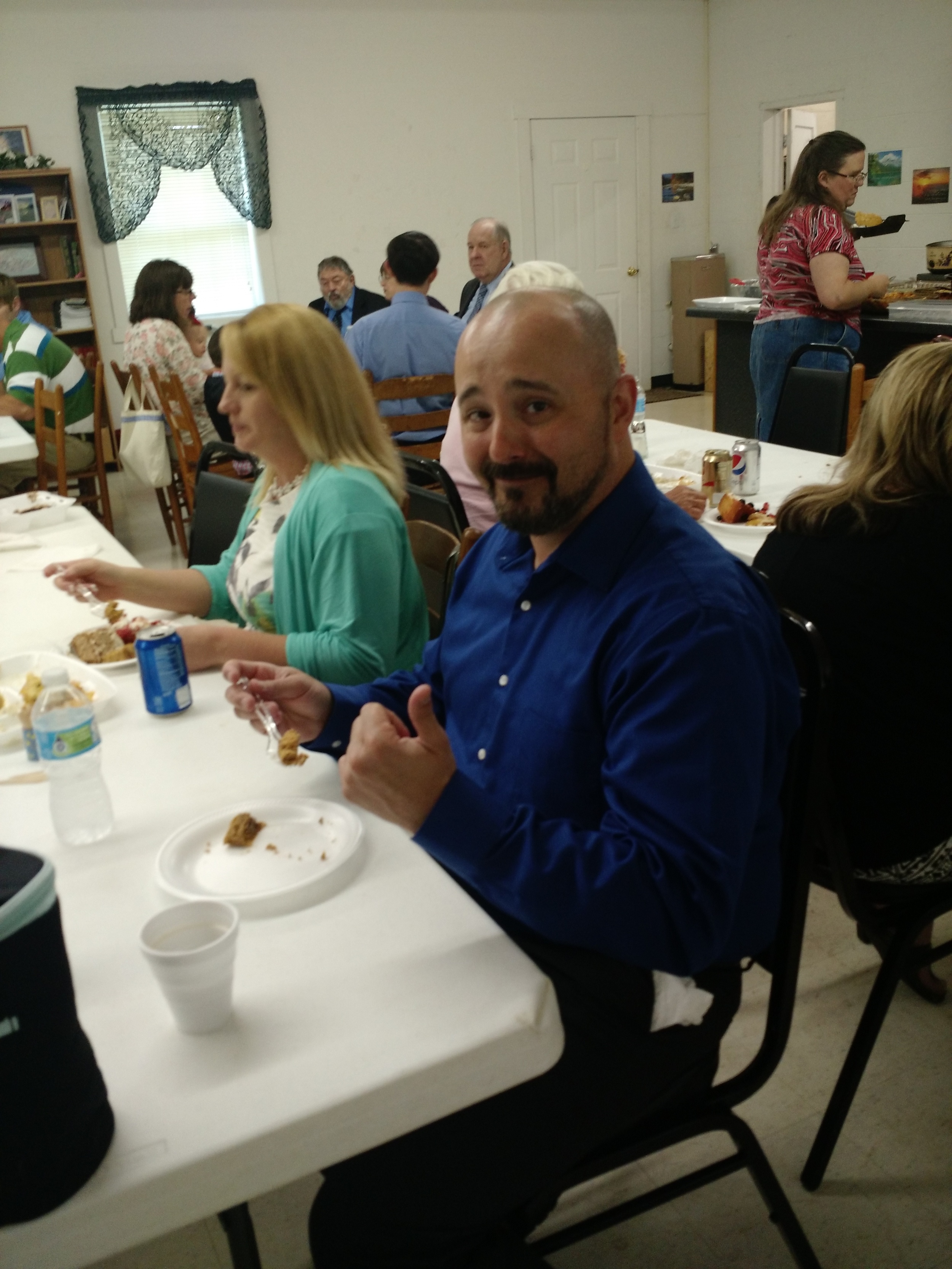
The stack cake was well-received even among all the brightly colored competition.

The stack cake was well-received even among all the brightly colored competition.

A reader requested the recipe for Apple Stack Cake - here's mine:

1 cup Molasses (can use 2 c. sugar)
1 cup Butter
2 well beaten Eggs
6 cups Flour
1 tsp Salt
1 tsp Vanilla
1/2 cup Buttermilk
Mix together and pat into 6 or 7 nine inch pans
Bake at 450 degrees until slightly brown

Filling:
1 lb Dried Apples
1 tsp Cinnamon
1/2 tsp Cloves
1/2 tsp Allspice
1/2 cup White Sugar
1/2 cup Brown Sugar

Wash Apples, cover with water and cook until tender.
Mash thoroughly; add sugar and spices

Spread filling between layers.

Let stand 12 hours before serving.

Quilting In India

Tennessee Mountain Stories is supposed to be a blog about the history of Tennessee’s Cumberland Plateau.  And one of our greatest traditions is quilting.  So when I saw an advertisement that explained the “Kantha” created by the women of West Bengal, India, I was naturally fascinated and wanted to share this with you.

The verbatim text from the advertisement for Southeastern Salvage is:

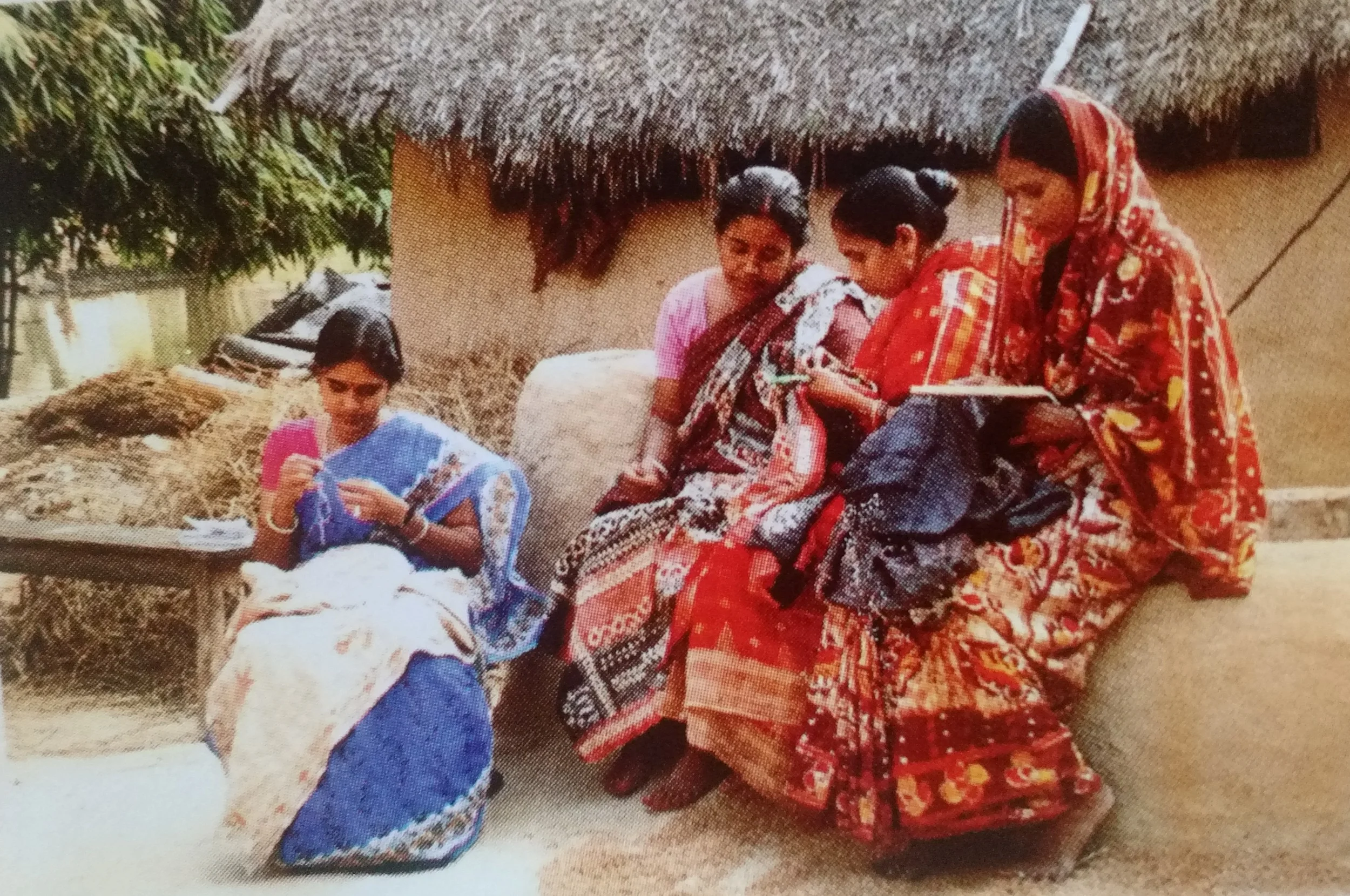
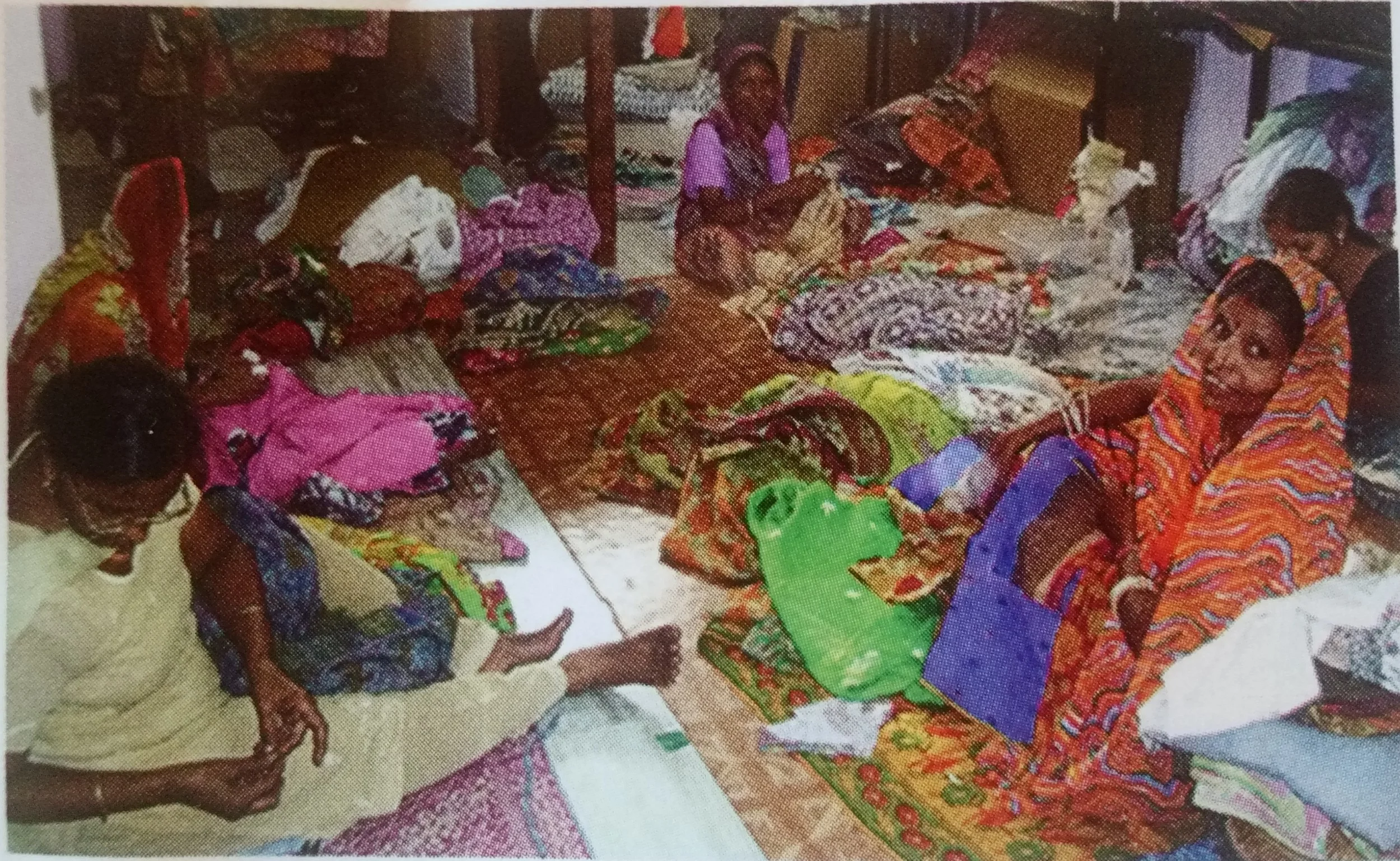
For centuries, village women in West Bengal, India have stitched together scraps of cloth and old saris to create stunning quilts for their families, to keep them warm.  The tradition of kantha (meaning “old cloth”) has been passed on for generations, from mothers to daughters.  It is believed that old cloth keeps the user safe from harm, so each piece is an investment of time, skill, creativity, patience and love.

Reflecting the culture of the region, vintage recycled saris are layered and painstakingly hand-embroidered with thousands of small and delicate kantha stitches to create one-of-a-kind quilts.  Each woman has her own personal style and stitch, making each piece entirely uniique and truly a work of art.

Saris are the traditional dress for women in South Asia.  It’s a long strip of fabric, five to nine yards, that is wrapped around the body to create a dress with one end draped over the shoulder.  So that’s a lot of fabric to work with – certainly makes for a different kind of quilt than the scraps of a standard 1940’s shirtdress.  I once met a retired missionary to India who had worn the traditional dress for many years.  She showed a group of ladies how to wear the dress and it was pretty fascinating – as was her story of the first time she was handed one and sent into a room to put it on.  I can’t imagine what I would have come out looking like if I was expected to wear nine yards of fabric without scissors or needle and thread!

Yet the tradition of teaching younger generations to create this kantha was awfully reminiscent of my own grandmothers teaching me to quilt.  We may not believe our scrap quilts have any kind of protective power over our loved ones but we have always known they would ward off winter’s chill and that was enough protection for us.

It amazed me in reading this the similarity of women caring for their families half a world apart.  I’d wager we couldn’t find a single Kantha maker who’s ever heard of our mountain yet for generations they’ve been frugally re-using worn out dresses to create warm coverings for their family just was we were.  It’s a pretty small world after all.

Monterey Train Depot Museum

The gift shop at the Monterey Depot Museum has graciously agreed to stock Replacing Ann and I want to thank Julie Bohannon for that.  When I visited the museum recently to deliver the books I took the opportunity to snap some pictures and make some notes to share with you.

When the Tennessee Central Railroad finally topped the plateau in 1890, they quickly realized that the climb up the mountain would tax their steam engines and by 1905 a maintenance facility was built in Monterey and the station there became the headquarters for the Eastern Branch of the Tennessee Central. 

This was a real boon in the local economy.  Of course the railroad brought in jobs but it also opened up markets for coal, lumber and agricultural produce that previously could not reach markets. 

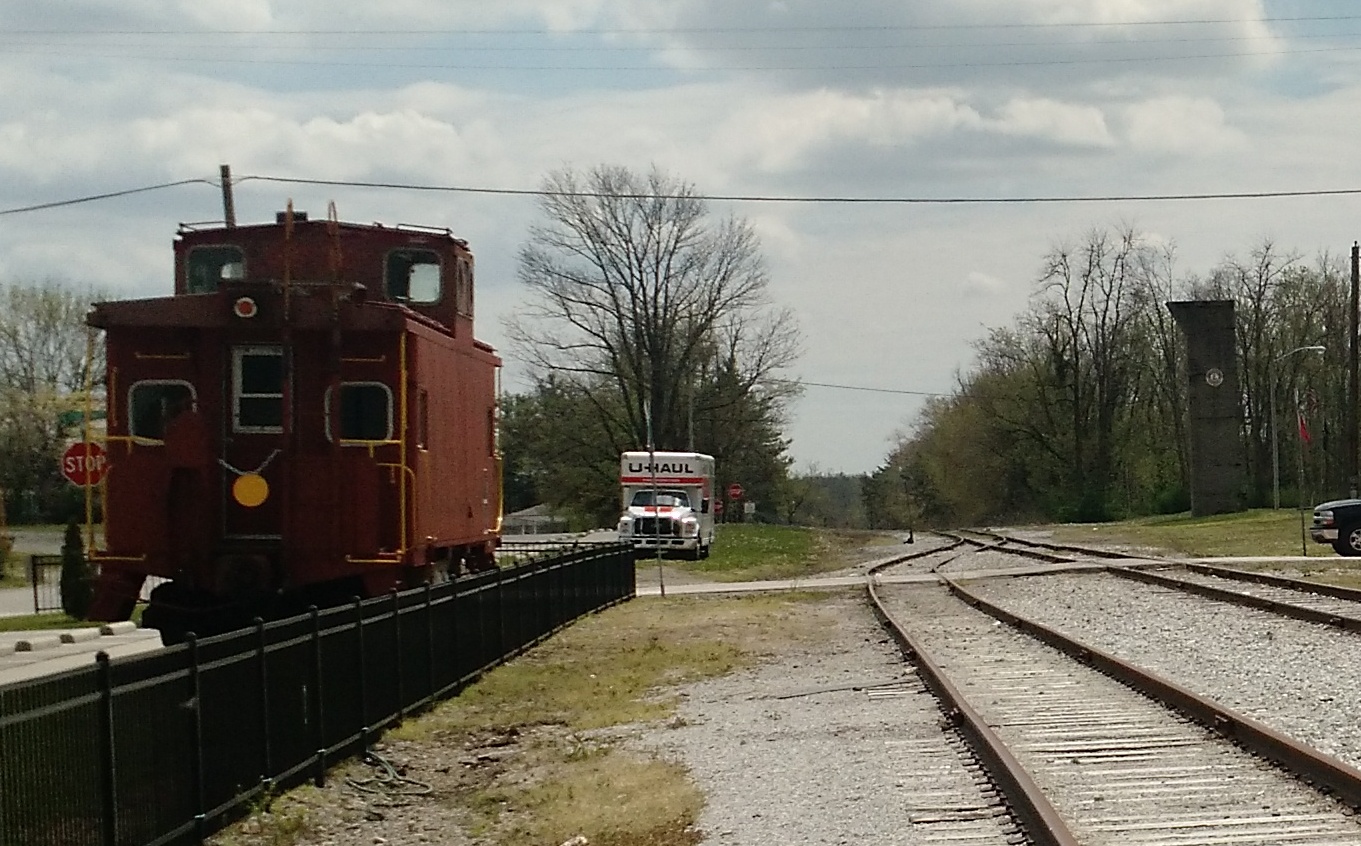
General John T. Wilder was instrumental in getting the railroad up the mountain because of the coal operation he planned in Wilder and Davidson.  He is often mentioned in the museum and in fact, there is a large plaque outside with good information about him.  One of the two houses he built in Monterey still stands watch over the depot and the Imperial Hotel which he built to serve railroad employees and passengers is still next door.

Most of the original buildings are gone, as are so many landmarks of Monterey’s heyday.  There were two operating passenger depots in town - the original depot from the early 1900’s burned as did so many wood-framed historic buildings in Monterey. The rebuilt depot stood long after the close of operations and was eventually dismantled.  The roundhouse burned in 1949 and was never rebuilt.  However, the old coal chute can still be seen adjacent to the remaining tracks.  Some tools from the shop were recovered and they are now displayed in the museum.

There were numerous tracks in place when the railroad was moving passengers as well as freight across the Cumberland Plateau as well as maintaining engines in Monterey.  The museum boasts a beautiful diorama of the town and the orientation of the tracks to the depot can be seen clearly on it.

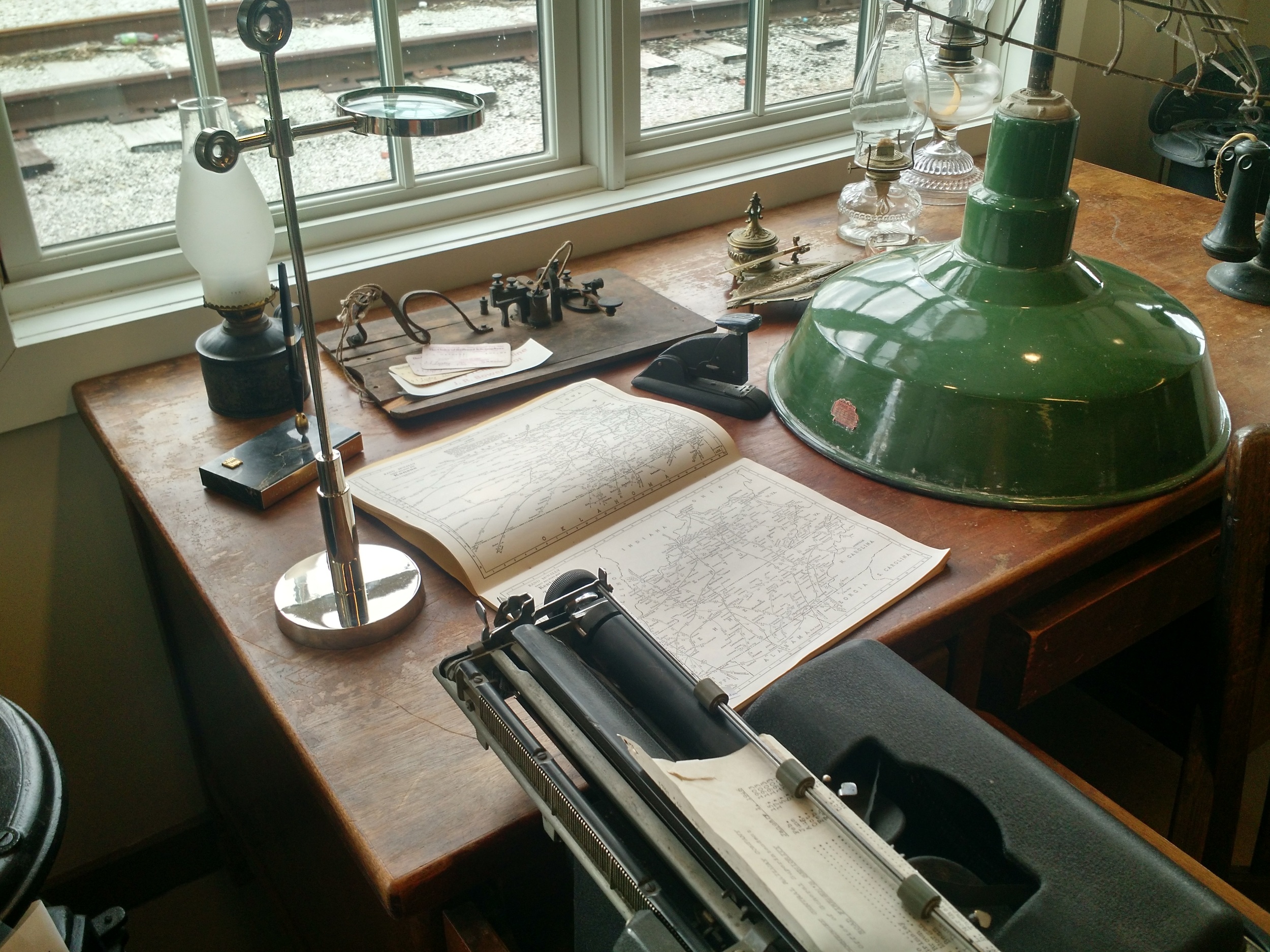
I particularly enjoyed the beautiful display of a stationmaster’s desk, complete with telegraph.  There are a number of maps and graphs that anyone interested in railroad or Plateau history would enjoy. This one in particular is a whole history lesson in itself with information on the mining companies that operated, where stores, schools and post offices were located and even who owned some of the farms and homes in the area.  Manual Powell, a Wilder miner, created this map.

IMG_20160414_115853574_HDR.jpg

The scope of the Monterey Depot Museum encompasses the whole community, not just railroading.   The Monterey Hospital is represented as well as a wonderful tribute to the city’s contribution to our military.  Community exhibits are routinely featured.  When I visited, Confederate History Month was beginning and volunteer Linda Whittaker was assembling an exhibit in that honor.

Admission to the museum is free and it is open Monday through Saturday 10:00 a.m. to 4:00 p.m.  If you’ve visited before, please leave a comment below and tell me about your experience there.

A Delicious Failure

I’ve been thinking a lot about food lately – would it surprise you to know that it’s a result of trying to be more disciplined in my eating?  In talking with a friend about cakes and icings, I got to thinking about old fashioned boiled icing so I made this lovely cake.

Just take a moment to laugh, it’s fine, we all did.

Now I’m willing to admit – even photograph – my less than perfect creations.  I’m willing for two reasons.  First, I’m far from perfect and a product like this helps remind me.  Secondly, I always want to encourage people to try new-to-you recipes even if they don’t always turn out perfectly.

But it’s a third reason why I’m sharing this failure with you today.  I made this in my climate-controlled home on my easily adjustable electric stove and whipped the egg whites with my counter-top mixer.  Yet this is a very, very old recipe.  In fact, it was the standard cake icing for my grandmother’s generation.  However, they made this sweet treat with none of the conveniences I just listed. 

Can you even imagine cooking delicate foods like this icing or candy over a wood-fired stove?  No temperature control, just drag the pot farther from the fire box if it gets too hot.  And by the way, it’s a warm day today and standing over that old woodstove would have been hot everyday of the year.

Then there’s the question of beating egg whites.  How do you even accomplish that without a mixer?  Grandma had a hand beater – like the blades of the electric mixer but with a handle, gear and crank at the top.  I suppose if you didn’t have one of those you could beat a wire whisk hard enough and long enough to transform egg whites into meringue but it makes me tired to even think about it.

I’m sure it turned out runny sometimes in that generation too.  They ate it anyway – just like we did.

Now, I don’t own a candy thermometer- and maybe today’s fiasco is the reminder that will make me add that tool to my kitchen toolbox – but I can see my Grandma standing at the stove with a tablespoon held high above the pot, waiting for the syrup to “spin a thread”.  I had the hardest time learning what that meant and how you could ever see syrup in a thread.  Well, eventually she made me understand and I’ve been using her method ever since.  It really has worked in the past.

I learned so much in Grandma’s kitchen.  The fact is, there were lessons learned there that I didn’t realize until much later – maybe she’s still teaching me despite losing her nearly ten years ago.  Pulling out a recipe like this is a sweet reminder of Grandma and big family dinners at her house and the clan all gathering together to fellowship despite the quality of the food that was served.  (But didn’t the food seem better at those meals?)  Maybe that’s why they were able to make this beautiful icing with rudimentary tools – they knew it would be appreciated no matter how it looked.

Do you remember scratch cakes and boiled icing?  I’d love to hear about it.  Please click “Comments” below and if you have any trouble leaving a comment, you can click here for easy instructions.