Tennessee Mountain Stories

The Taylor Place

After a couple of weeks “off the mountain”, today we’re back in Clarkrange at one of our local historic homes. 

After a mention from one of my readers, I took steps to learn about The Billy Taylor home.  While I knew of the place, and certainly knew that it was quite old, I had no idea the wealth of history I would find there.  In fact, I can hardly touch it here so we will definitely re-visit The Taylor Place in the future.

While I knew this house had stood for many years down it’s lonesome lane, I now understand that this is probably the oldest house in Clarkrange and might actually be a strong contender for the title of first house on the plateau.  It seems that a federal surveyor was sent to what is now Clarkrange to prepare for land grants of the area.  This man built for himself a shelter in the form of a one-room log house with a low loft overhead.  When his surveying work was finished, he simply moved on to his next assignment and the log house was left behind. 

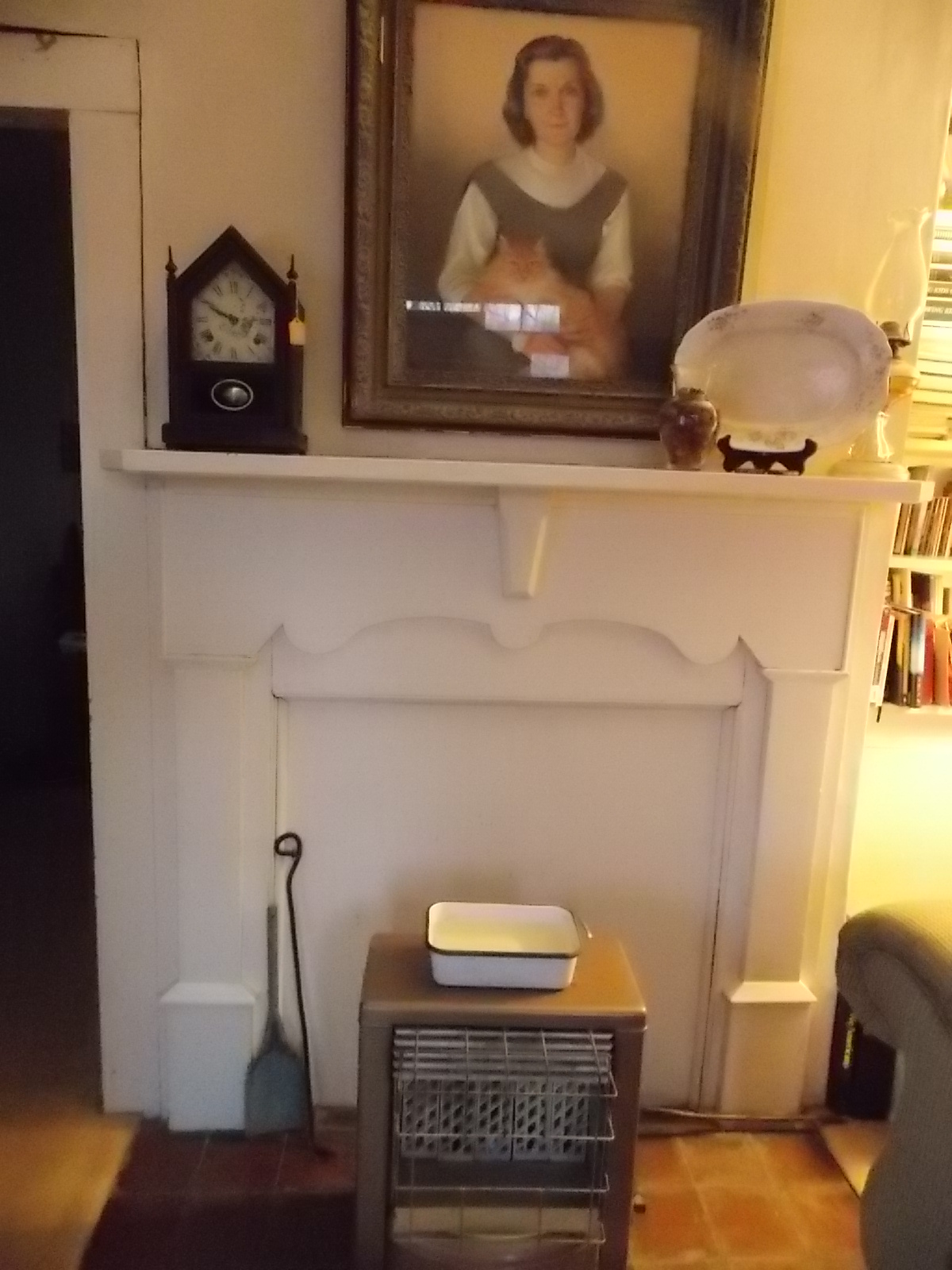
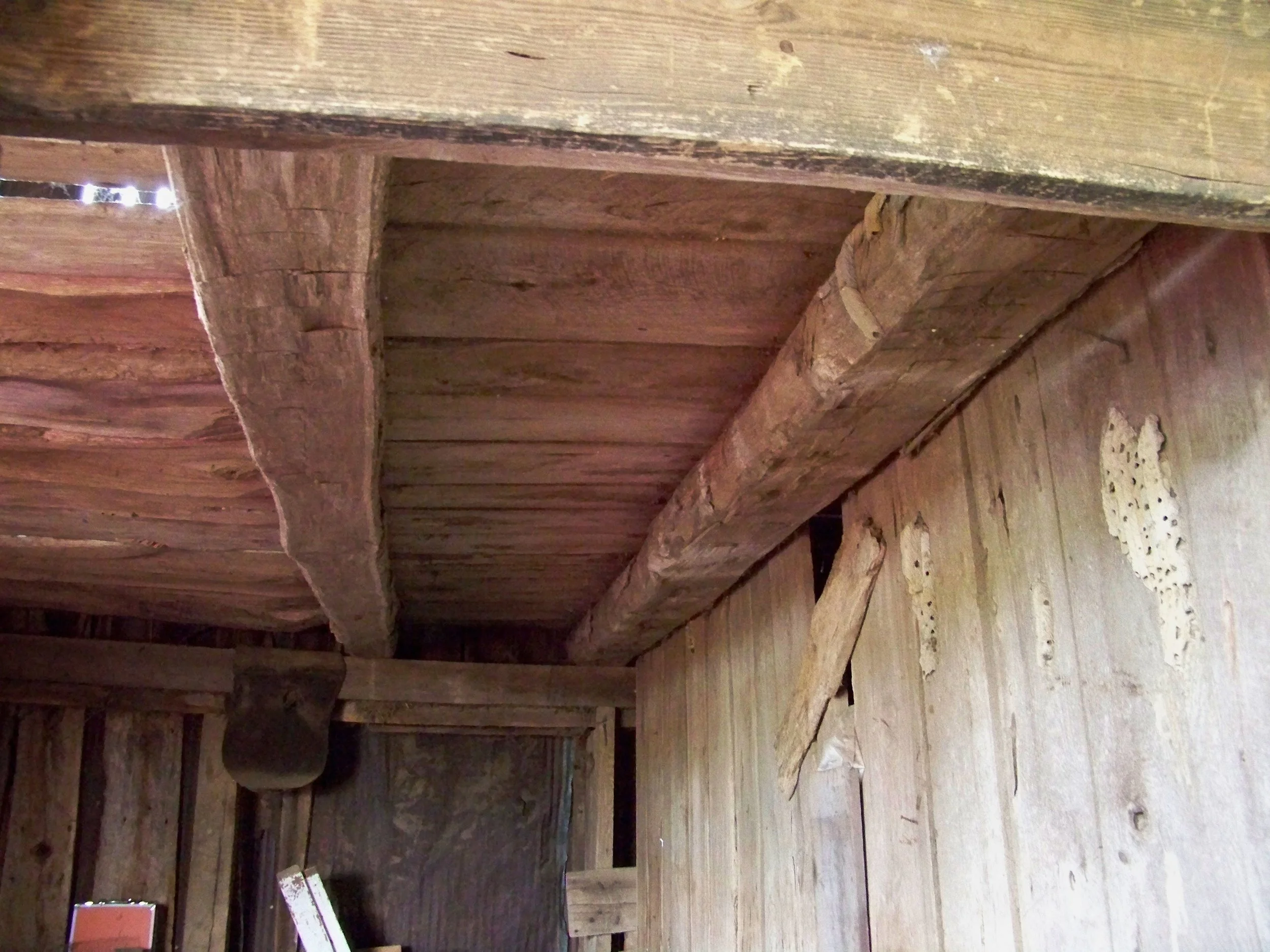
That log home would become the central part of the Taylor house.  I don’t have the exact date of the surveying work, and therefore don’t know the original construction of the house.  The dwelling began to grow as the resources and needs of its occupants grew.  The low loft would be raised into a full second story – the hand-hewn logs of that second story were revealed when cabling for modern appliances was installed.  Then, a room was added here, a porch first added then enclosed, until a home was created that would accommodate large families.  In fact, three generations of the Taylor family have enjoyed the house and today Ken Taylor is lovingly preserving and restoring it.
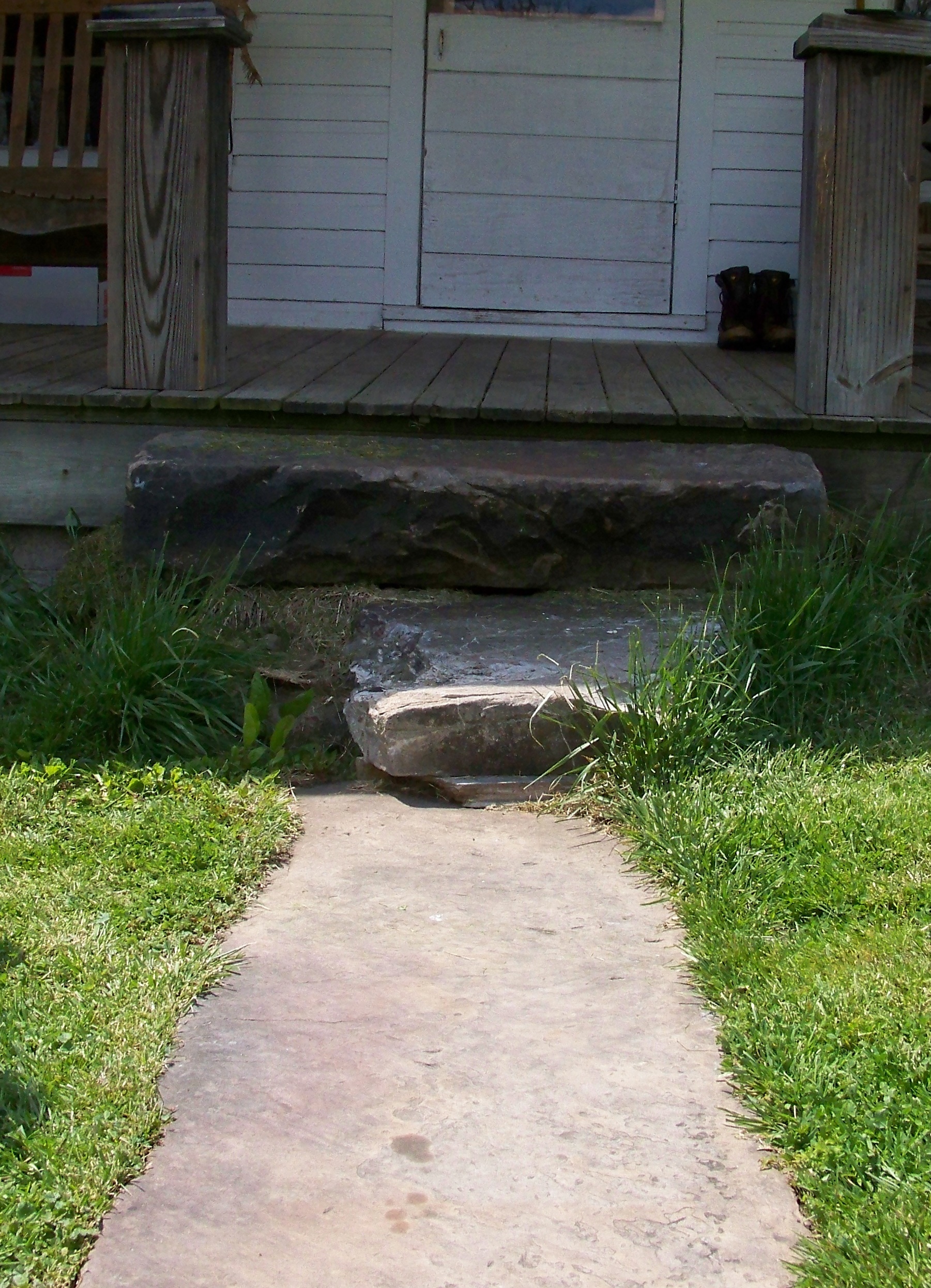
As a house stands decade after decade, she develops a character of her own, and a history known throughout the community.  We don’t know all of the families that sheltered here, but the community would remember one woman who they deemed a witch.  You see, there’s a cave very near the back of the house that has a natural fireplace.  This woman chose to do her cooking in the cave, no doubt taking advantage of the natural coolness and avoiding heating up the little log house with the wood stove during warm weather.  But that was unconventional and mountain folk are suspicious of the unconventional so they declared she must be a witch and she was cooking not supper down there, but potions!  Years later, Herschel Taylor would tear out the fireplace and chimney for his father allowing the staircase to be moved.  When the original stairs were torn out, a box was found beneath them containing a complete woman’s skeleton.  Who she was has never been discovered.  The skeleton was donated to Joe Lockhart who was in medical school at that time; he kept it in his medical practice and it would forever after be known as The Lockhart Bones.  Nothing gets wasted on a mountain farm, and that fireplace was recycled as the front porch steps.

Some of the changes to the house can’t really be dated.  The Fentress County History Book states that the Bradford family came to town in 1884 and built a house here.  However, this is the house they lived in.  So it would seem that at least a portion of their house was already standing when they bought the property and how much construction was done in the late nineteenth century is unclear.  Perhaps they were the family that enlarged the cabin to two full stories.  The historical marker for their daughter Kate says she was raised in a two-story log home so that would seem to indicate that not a lot of additional square footage was present during their lifetime.  Now, Kate Bradford puts this house in the history books for she would be the first female gubernatorial candidate in Tennessee.

At some point a porch was built around a cased-well.  A very innovative Billy Taylor enclosed that porch, allowing his wife to draw water without stepping out into the weather.  She was quite the envy of her neighbors for that convenience.  Billy’s innovation and forward-thinking can be seen in much of the house’s history.  An upstairs balcony, so common among houses in the deep south to accommodate outdoor living during the hot summers, is rare on the plateau yet one of Billy’s additions included such a balcony.  Mr. Taylor also built-in cabinets, something that was uncommon even in fine homes in the nineteenth century; there are deep bins that held flour and meal beneath ceiling-high shelves behind the paneled doors.  When TVA first ran power lines through the area, Billy helped with the surveying and negotiated a dynamo to be installed in his cellar.  I’m unclear how long the dynamo was used, although it was still in place when Ken grew up in the house.

It always seemed curious to me that such an old property would be located so far from the main road.  However, roads are always moving and sure enough there was a well-traveled road running right beside the house.  The rattling wagon wheels of that road gave Maggie Taylor a fright or two and led her to believe her house was haunted.  Billy calmly explained it was the wheels running over the rock outcroppings of the road.  Like the witch story, ghost stories tend to stick around and there are numerous such stories surrounding this old house.

The farm contained one hundred acres when Billy Taylor purchased it, and there is little indication that it was ever much larger than that.  The big barn so central to farm life stands adjacent to the house.  It too is constructed of hand-hewn beams and assembled with wooden pegs.  The signs of years housing working mules and then many pounds of drying tobacco are still evident yet it stands sound today.
Chief George Fields Log Home


At the junction of Bradley, Meigs and Hamilton counties sits tiny Georgetown, Tennessee.  Today it’s merely a speed zone along highway 60 but in the nineteenth century it was an important little town.  There, Cherokee Chief George built a two story log home from which he operated a trading post while he and his family lived upstairs. 

It is said that Chief George owned 1500 acres of land surrounding this large log home.  The house was built as a dogtrot cabin, which was a popular early American cabin style.  This type of building had two rooms joined by a porch and shared a common roof.  While two-story models are rare, this cabin was surely built with the intention of commercial use.  Therefore the lower story was probably intended from the beginning to be a trading post.  It would also house the post office for Georgetown.   At forty-six feet long, this was a very large cabin.

2 Story Dog  Trot style log house - The Chief George House would have looked very similar when first built.This is The John Looney House near Ashville, Alabama, a rare example of a full two-story dogtrot. It was built circa 1818, during the Ala…

2 Story Dog  Trot style log house - The Chief George House would have looked very similar when first built.
This is The John Looney House near Ashville, Alabama, a rare example of a full two-story dogtrot. It was built circa 1818, during the Alabama Territorial period. From Wikipedia

While the construction date is unknown, we do have the major historical marker of the 1830 Cherokee Removal, also known as the Trail of Tears.  The house was obviously built before that.  There was a marker stone on the chimney with an 1842 date inscribed; this may have been a date for that stonework, or may simply have been antique graffiti. 

Many families called this home through the years, and their descendants can still be found in the area.  The home adapted with the times, closing in the dog-trot porch to make an entryway and enclosed staircase with a wide porch spanning the front; to the back of the house a large kitchen had been added.

When I saw the house it had experienced a fire in that back kitchen area which scorched but did not destroy the original log house.  There was beautiful trim still visible despite the fire’s scars.  Each end of the house had large stone chimneys that accommodated four fireplaces – one in each of the original rooms.   While one of the downstairs fireplaces had been fitted with a modern facade, the other still sported a much older, wooden mantel.  The large, white oak logs were hand hewn and joined in a unique semi-dovetail pattern.   Even with its roof missing, it was obvious this had been a grand house that had stood the test of time and sheltered many.

I keep thinking about the walls of these old homes telling their tales and it brings tears to my eyes as I think of the discussions Chief George’s home would have heard.  Can you even imagine how this must have been a gathering place for the native people living around Georgetown?  As the white settlers they had served and befriended began to turn on them demanding their land and refusing to even allow the people to live in peace, what must the traders here have been saying?  Did they question what went wrong in their relationships?  Do you think they contemplated rising up to physically defend the land they’d called home for generations? 

And then the Cherokees were just gone.  Driven away by soldiers, they left homes like this large log house.  Can you imagine moving into it?  Could you lie down near the warmth of those big fireplaces, could you take shelter from a rainstorm in the dog-trot porch and not remember the man who had hewn the logs and carefully stacked and chinked them.

Yet the house stood.  For another one hundred seventy-five years people would call it home.  Children ran up the stairs, families passed quiet evenings by the fire and bread was passed around the table.  The European descendants who took the property from the Cherokees would themselves see many hard times.  This house stood through The Great Depression, then the rationing years of World War II.  Those stories also might come from the walls – heartache as sons were sent to war, hunger and disease, the sorrows of life that always accompany the joys.

When fire broke out in the rear of the house, it would seem the end of a long story.  But so much of the house was still sound that the logs were recovered by Greg Filter who bought and disassembled it.  The Blythe Ferry, Cherokee Removal Park has discussed re-assembling it and I do hope that will work out.  Wouldn’t it be wonderful to be able to visit this historic house?


The Patterson House

In the last half of the nineteenth century, a family of millers by the name of Patterson came to Sale Creek, Tennessee.  They were welcomed by the resident Cherokees because of the valuable product they could offer in flour and cornmeal.  By 1880, their native friends were facing a forced removal but the Pattersons had found their home.  They built a simple yet roomy four bedroom farmhouse that has stood and sheltered five generations of that family. Twelve years ago the current Patterson family moved in after the death of a great aunt who was twice widowed with no children of her own.  Amazingly, in its 135 years this house has never really been empty and that is a testament to the family that kept finding someone willing to live in it and give it the care it needed to stand.

European homes are usually passed through a law they call primogeniture that gives entire estates (house and household items included) to the firstborn male child.  This is a pretty foreign concept to us in rural America. Today, too many times homes are sold completely out of the family.  Even if one child or grandchild is willing to take on the property, the household belongings are separated among family members.  It is a precious thing to have even a small reminder of a loved one, but by this method things are quickly scattered.  However, the Pattersons have followed more of the European tradition and today The Patterson House is filled with literally five generations of treasures.

There are mementos of the original milling trade – mill stones stored in the barn and antique scales and grain scoops which seem poised to tell of their years of service measuring meal and sending neighbors on their way, ready to make bread.  It makes me wonder how open the house was to the populace.  Certainly long-time residents in Sale Creek today appreciate this building as an integral part of the community.  Gayle Patterson, the current lady of the house, very graciously sees her home as belonging to more than just herself, her husband and their children.  A few hours spent in her flower beds often yields a neighbor stopping in to comment on the house or share a bit of history with her.  Surely this speaks to a family that has always been caring and neighborly. 

Just as I mentioned last week, changing times and tastes have changed this house.  Built as a working farm house, well before indoor plumbing was even considered much less thought to be an absolute necessity, there was neither living room nor upstairs bathroom.  So the last resident decided she’d prefer a more formal, Victorian-type home and made changes to adapt the farmhouse.  The drive was moved to direct visitors to a new entry into the former master bedroom which was converted into a parlor.  Making a simple switch, the original parlor became her bedroom.  But the question of where to put a living room remained.  Ah, the dining room would serve well but that necessitated the kitchen transforming into the dining room and a new kitchen would be built on the now-enclosed porch.  Whew, it rather makes your head spin, doesn’t it?  But I doubt all of these changes were happening simultaneously so maybe it wasn’t quite as chaotic as the mental picture the list conjures. 

Then there was that missing bathroom upstairs. You don’t have to look too closely at a lot of older homes to see that bathrooms were created from existing space or added as afterthoughts of original plans.  Often, there are big, roomy bathrooms in otherwise modest homes – these were usually bedrooms that were just converted entirely.  One reader last week recalled an English hotel room in which the addition of a private bathroom obliged guests to walk sideways around the bed.  Well The Patterson House wouldn’t squeeze the upstairs bathroom into a closet, nor would it waste an entire bedroom.  So a bedroom was split into the new upstairs bathroom and a new hallway – never mind the fireplace in that bedroom, it’s now in the hallway.  All of these changes necessitated the removal of two doors, but in proper farmer-fashion, Miss Katherine saved the doors in the barn because you never know when you might need them.

Some changes were extremely practical, such as the altered roofline hoping to eliminate the collection point for leaves which were damaging the roof.  However, the bay windows were built for function as well, drawing cool air into the pre-air-conditioned house.  Although the two features seem unrelated, Great Aunt Katherine reported the house never “drawed air” as well after the roof was changed. 

I’ve mentioned many times in these articles that they are driven by research for my fiction writing.  Usually I’m researching legends that I’ve heard all my life, or people that I’ve always known about.  This fascinating home and family are new to me but I am certain they will soon find a home in one of my books and I am eager to write it.

Our Heritage in Houses


Highclere Castle in Hampshire, England.It is the set for ITV's Downton Abbey

Highclere Castle in Hampshire, England.
It is the set for ITV's Downton Abbey

British Television’s Downton Abbey is a huge success on both sides of the Atlantic and whether or not you enjoy the drama, there is a history lesson in every scene as we virtually walk through Highclere Castle, where the show is filmed.  My curiosity led me to watch a documentary about the seventeenth century house and then shows about other such buildings until I realized that Brits are not only documenting these old structures, they are systematically trying to save them.  Well, that got me to thinking about our own historic buildings.

On the mountain, we certainly don’t have any seventeenth century castles sitting around; in fact, we scarcely have any houses that have reached the century mark.  Of course, we can find some old buildings in the surrounding areas and I would very much like to explore some of those with you on the blog.

I think we’ve pretty well established here that I don’t care too much for change.  I never quite understand our American tendency to tear down historic brick and mortar buildings and replace them with concrete slab, steel framed, pre-fab structures.  I’m puzzled when I see big old houses left to fall down with a house trailer pulled in just a few feet from the front door.  Now, I certainly realize there are challenges to renovation as well as occupation of old buildings.  So I ask you, do you think there is any value in keeping historic buildings?  Can we learn anything from them?  Do they give us a clue to life in the past?  Are they only valuable - or historic - if someone famous lived there?

Home of Lester Key in Martha Washington, TN constructed about 1939.It was a log home - in this picture it's been covered by brickside siding.  You see an addition on the lefthand side which was made about 1950 when only two of his children were…

Home of Lester Key in Martha Washington, TN constructed about 1939.
It was a log home - in this picture it's been covered by brickside siding.  You see an addition on the lefthand side which was made about 1950 when only two of his children were still at home.

I certainly believe the answer is a resounding “Yes” to each of these questions.  We know that our grandparents’ generation lived differently than we do today.  We require more space.  Lester Key had a little log house in Martha Washington where he raised seven children.  It had an open loft where all of the kids slept.  There was only one boy and his space was separated from the girls’ by a curtain. The whole house was maybe seven hundred square feet.  The house was in no way unique to the area, most homes of the day were quite similar.

Houses of that generation had tiny rooms compared to today’s open floor-plans, and every room had a door.  They planned and built for practicality since smaller rooms were much easier to heat and in a pinch, rooms could be shut off and left cold.  And that brings us to the luxury of heat.  One of my favorite lines from Downton Abbey was spoken by the Dowager Countess, Violet Crawley when she referred to her relatively small dowager house she said it was the first time she’d been warm in years.  Those palatial, stone homes are notoriously cold – large rooms with high ceilings that were originally heated only by fireplaces are nearly impossible to get really warm. 

Perhaps I shouldn’t be comparing our buildings to European country homes, but I certainly believe our beloved spaces hold as much value as those big houses despite the great difference in their age.  Certainly families who were raised in some of the little homes like the Lester Key example, would argue that the families in those big houses couldn't have been any happier than them.

Am I just being sentimental?  Probably. 

As I watched those renovation shows, I saw houses that were hundreds and hundreds of years old.  It opened my eyes to the real need for renovations.  Which leads me to another question for you:  Is it better to see homes greatly altered to suit modern lifestyles or to just have them razed? 

I’ve now decided that I’d rather see the significant changes than to completely lose the building.  Of course, I always appreciate an honest presentation.  I recently learned (and maybe everybody else in America already knew this) that the White House was completely gutted and reconstructed in the late 1940’s.  While that’s no secret, when we talk about the presidential mansion, we think of it as being built in 1800 and home to every president since John Adams.  However, President Adams would be lost in the house sitting at 1600 Pennsylvania Avenue today.

Still, if you learn about any home that’s been occupied for a century or more, you will undoubtedly learn of many changes as times change, technology evolves and the face of the American family shifts.  I’ve now decided that I’m okay with knowing I’m standing in your spacious parlor which used to be the master bedroom or that the big bathroom you’ll direct me to at the top of the stairs was created from another bedroom since the house was built before indoor plumbing.  It is better to see these changes and to know that a family is still loving a house that’s been standing for four or five generations, and it’s still home. 

As I’ve talked to folks about their old houses and read history preparing for this series of articles, I’ve thought again and again, if only these walls could talk.  Can you imagine the history we might learn?  So for the next few weeks we’ll take a look around the area (and we’ll look inside whenever we have a chance) and see what we can learn.  In the end, I hope you will want to leave a comment telling me whether you think these old houses are worth the effort.

A Trip to The Pres Beaty School

I ask a lot of questions.  I know it’s annoying sometimes – okay a lot of times I’m pretty annoying.  But you wouldn’t believe what I learn this way.

In researching last week’s article about efforts to keep Clarkrange High School open, I learned of the “History of Education, Fentress County, Tennessee” which was produced by the Retired Teachers’ Association in 1986.  Mr. Steven Little has graciously shared it with me.

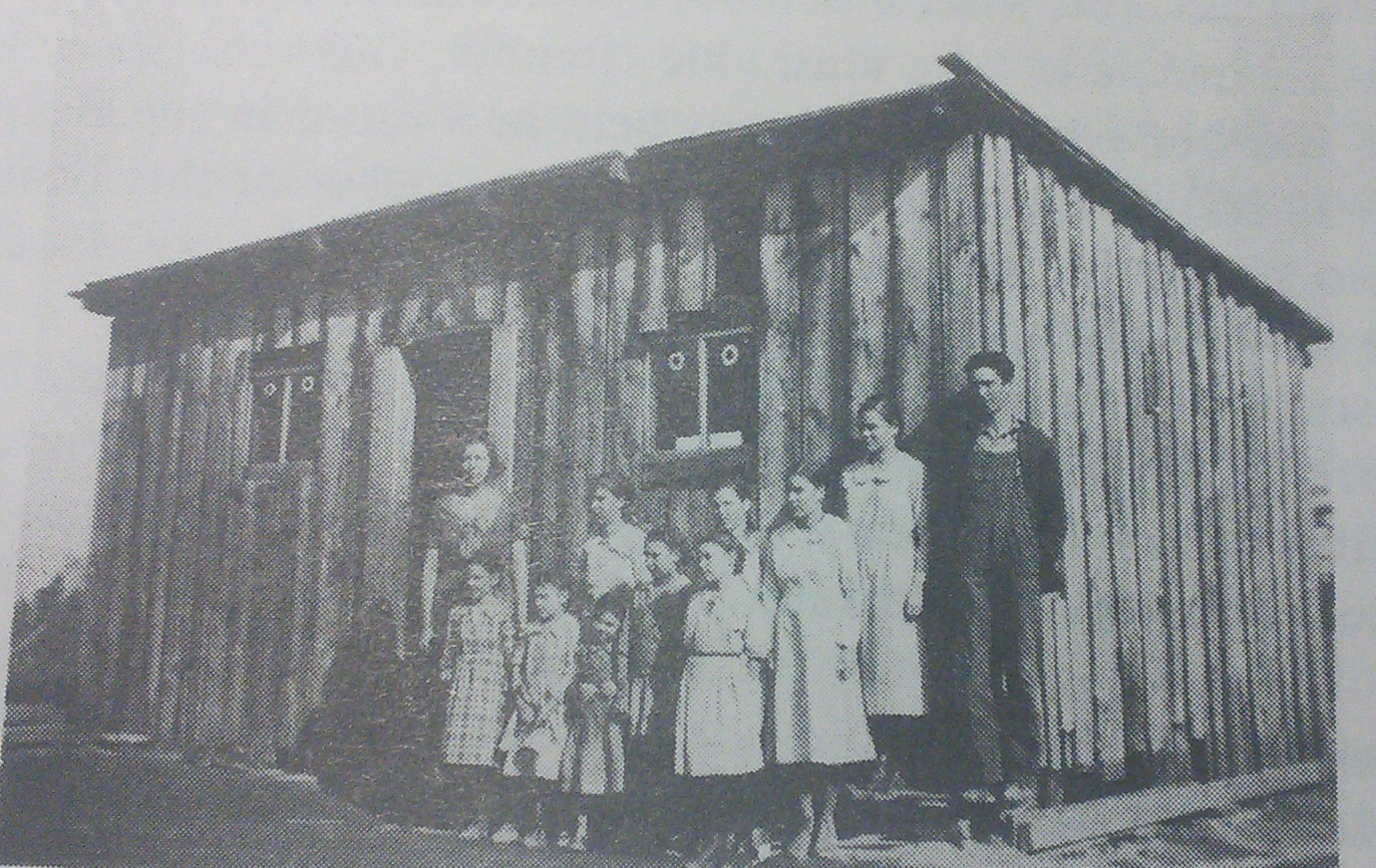
Pres Beaty School 1933

Pres Beaty School 1933

The booklet presents the Pres Beaty’s School with a story by Wilma Pinkley.  She describes the school as established in the 1930’s.  While the location of the school is not given, it is described as being in “a sparsely settled area and so far away from any school that the Fentress County Board of Education established a school just for this one family.”

She then presents an account of a Doctor Pearson driving his Dodge car to this remote school, along with his nurse Mrs. Roys, in November 1937.  The account was so entertaining that I want to share it with you unedited and in its entirety (including her spelling).  I hope you enjoy it as much as I did.

Medical Team on their visit to the PRes Beaty School

Medical Team on their visit to the PRes Beaty School

Mrs. Roys had received directions from someone as to just how to get to the school.  She had also written the teacher that we would be there on this special date.  We traveled approximately 15 miles on a good oiled road – and then angled off on a side road and headed straight for trouble.  “How lucky we are that we cannot look ahead and see what the future has in store for us.”  After a few miles travel on a fairly good graveled road, we came to a long mud hole in the middle of which we turned off on another road which led through a field and into what I now consider a forest.  Shortly after this, we met a truck load of logs, so it was necessary to back for some distance in order to find a place to pull off into the woods to let the truck proceed.  In continuing on this road, we made our first real human contact.  “This man with some boys was hauling wood.  He told us that one of the boys could go with us so we would not get lost on the rest of the route, but the boy made many excuses to keep from going and told the man, on the side, that he did not know any of us and since he had been reading in the papers about kidnapping, thought that might be our purpose in coming in there.”  After receiving minute directions, we continued the journey.  We found that the forest was full of narrow roads running in every direction.  “We rolled over rocks which could not be crossed, went through holes which could not be gone through and did all sorts of impossible things.”  In one instance, we found a tree across the road which we chopped loose from its stump with an ax we found at a nearby wood pile.  It required our combined strength to move the tree.  At another place, we ran upon a stump with the differential housing of the car so that the rear wheels were left waving in the air – the car had to be jacked up so that chunks could be placed under the wheels.  After the first two hours, we thought we could not possibly find any worse road than we had already been over, but we did.  Finally, it became so late that it was necessary to return to Jamestown to be there for the afternoon schedule of our clinic. 

               “Even though we failed in our objective, our courage is not daunted and we plan to try again next week.”

(Written by Marie Bennett, Co. Supervisor)

               Once again we four started out to conquer that which seemed to be unconquerable.  I dare think we might be a little egotistical to think we were the type that never give up.

               The morning was not as cheerful as the preceeding Thursday and maybe we were rather doubtful as to the outcome since we had such an unfavorable trip before.  Overhead the sky was overcast with clods scurrying around and occasional rain drops were flitting across the wind shield of the doctor’s faithful Dodge.         

               Nurse Roys had not been idle during the week, and had arranged for a guide to escort us over the hills and creeks.  The guide, true to mountain traditions, had failed to respond to the urgent call of the “furrner,” thereby causing us to once again change our course.  The teacher at Silver Pines came to our rescue and furnished a girl to show the way.  Note the fact that a girl was chosen, once again proving the many different uses of the mountain maid.  We were able to drive through the pine woods for a distance of three miles, when we were confronted by a pole fence and were advised at the same time by the guide that we would have to walk the rest of the way.

               One of the things we viewed with no little apprehension, was the scales which had to be taken along to prove Nurse Roys’ point that corn pone and sorgum was not a sufficient diet for the children of the hills.  The Doctor’s pill bags were no light load, but we divided the load and started along at a lively and determined gait.  The road was proof enough that even a T-modeled Ford would be at a loss here.  The nurse kept sighing over a creek she knew we must ford.  We soon knew why she was apprehensive.  A very swiftly moving little river was merrily winding its way down the valley unobstructed by ferry boats or bridges.  True, a tree had fallen across, but it was narrow and slippery.  Being born in the mountains and long used to just such conditions, I thought I was equal to the situation and I started across the tree=no one urged me on because they thought it was impossible.  The doctor was especially concerned over the bag I carried.  I made good progress until I reached the bank and then the result of a good job well done made me dizzy, and like many others who lack the last round of reaching the top of success, I toppled over into the berry patch.  No damage was done to the bag, but my dignity had suffered.  The rest of the party waded.  I expected pneumonia.

               We proceeded up the hill and around the cliffs, which were lovely.  We deplored the beauty that grew on every hand with few to appreciate it.  Many times the girl informed us we were almost there and it was just a quarter of a mile farther.  The school was discovered at last and many exclamations of relief and delight went up from light hearts.

               The doctor, nurse, superintendent and I worked with as much speed as possible in order to make our return trip by one o’clock.  Many mothers took advantage of the free service and we were not able to get away as soon as we wished  It was afternoon and the walk had made us hungry.  One of the inhabitants of the woods gave us some nice sweet turnips, which she generously gathered from the patch.  It would not be a very good story if I left out the fact that this little school is operated for one man’s family.  There are seventeen children; eight of whom are in school.  Grandchildren fill up the required rank.

               It is an old story.  The one about getting stuck.  We did that, too, in a nice way.  I believe the doctor said it was the first time he ever got to the place when he didn’t know what to do next.  Being out with Dr. Pearson and knowing he doesn’t recognize defeat, that alone was enough to know the situation was plenty bad.  We must give thanks to a hunter who came by in time to save us from what appeared a watery grave.  With his superior knowledge of these roads and strength that had not already been taxed to the breaking point, we were able to pull out.

               All stories must end.  We arrive home destitute, weary and worn.  The story speaks for itself.  Were we hardy  I shall let my readers come to their conclusions, but as my mother always says, “We live in peae.  May we die in grease and be buried in a cake of tallow.”