Tennessee Mountain Stories

The Bean Shed: Part 2 of The Green Bean Phenomenon

                With just a little ambition (or hunger) it’s not too hard to come up with a profitable product or service – something you can do or make that other people might need, want or enjoy.  The challenge is marketing.  This is true today and it was surely true when snap beans began to sprout across the Cumberland Plateau. 

Clarkrange Bean Shed.jpg

                There were people who wanted the beans, they just had to be matched up with the farmers who were growing them.  Thus, The Bean Shed was born.

                On the east side of Highway 127, just south of the Clarkrange Baptist Church, Harry Martin donated land for the bean shed.  Some folks were skeptical of the success but many more were thrilled by the opportunity to market their produce.  (I don’t have the year that the bean shed was built, but would welcome that information from any of our readers.  Please just click on “comments” below.)  Two other sheds would soon be built in Clarkrange and several others across the plateau.  Jamestown had sheds operated by the Crooks and Beaty families.  Mr. Maddox had a shed in Crossville. 

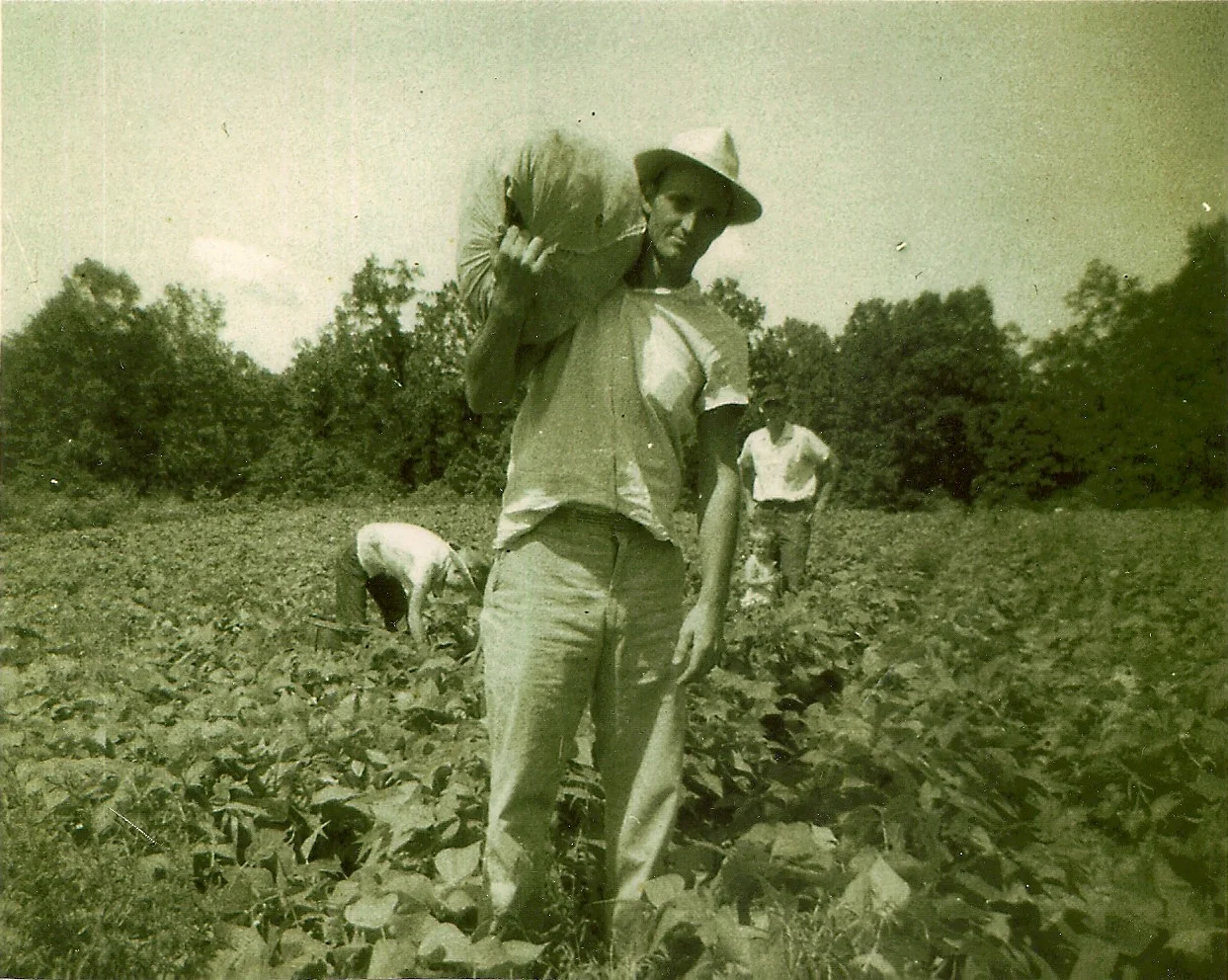
                From the end of June, everyday saw local growers filing into the bean shed with trucks loaded with bags of green beans.  There were even instances of people carrying a bag of beans in on their backs.  Months of hard work were about to be cashed in.  Buyers gathered, carefully inspecting the half-bushel sample of beans that each farmer displayed. Then, an auction was held and the highest bidder loaded his own truck with the sweet vegetable and headed out toward the canneries. 

                This place was all business.  While there were a small handful of folks who gathered just to see the excitement, mostly everyone was there with a mission.  For the children though, it was always a great adventure to make a trip to the bean shed.  Teaming with people, both neighbors and strangers, this beehive of activity felt like the fair and their day’s hard work was quickly forgotten as they watched it all.

                This economic center of the community was in operation until about 1961.  By then, the scale of production had outgrown the auction scheme of the bean shed and buyers were making their purchases directly from the farmers and loading them in the fields.  With the addition of tractors for planting and tilling, then the miracle of the mechanical picker, farmers that had been planting 5 – 20 acres were now counting acreage by the hundreds.  At this time, brokers began buying crops directly from the farmers and transporting them directly from field to cannery.

                I wonder if any of our readers ever remember visiting one of the bean sheds.  We’d all love to hear your account.  Just click on ‘comments’ below.
The Green Bean Phenomenon

                The shadows lengthened as the summer sun lazily began his trek over the horizon.  Coal oil lights burned in the homes as supper was finished, prayers were said and children tucked into their beds.  Sleep was welcomed, for the people of the plateau had worked hard this day.

Carrying In Beans.jpg

                Today was not unusual; it was summertime and the green bean harvest was upon us.  Early in the morning, men, women and children alike streamed into the bean fields to pull from the vines little emerald sticks of wealth… or at least livelihood.

                The green bean phenomenon began its sweep across the plateau in 1933 and lasted until the 1980’s.  In the wake of this sensation we find a community transformed, and lots and lots of stories! 

                As the story goes, in 1933 work was scarce and money short.  Well that’s just history – U.S. history.  We all know that with the stock market crash of ’29 the nation was plunged into The Great Depression.  I’ve heard stories of farm families who had no stake in the stock market, little money in the 20’s and therefore felt the depression years only mildly.  Perhaps that would be the case on the plateau as well – for there was no industry here before the depression years, no great companies closed their doors in that time, no breadwinners dismissed from good jobs. 

                Needing work and unafraid of hard work, Dempse Cooper spotted a truck loaded with green beans headed south through Fentress County and wanted to know what that was all about.  He fell in behind him and followed him till he could stop and question the driver.

                It seems the load had originated in Kentucky where farmers were growing green beans for public sale. Mr. Cooper saw an opportunity. He planted a single acre of beans.  By 1954, 6,000 acres of plateau farmland was planted in green beans and income from the crop had topped 1 million dollars.

                Green beans are somehow legendary in our community.  So, the telling will take several chapters – or weeks in the blog world.  Next week, we’ll visit The Bean Shed!  Now you know you won’t want to miss that do you?

Out for a Stroll

Strolling.jpg

Today we have walking tracks and treadmills in our homes or we drive to a gym to walk for our health.  Some of our larger (and generally northern) cities still have some foot traffic, but here in the south, we tend to drive to shop, drive to work, drive to church – wherever we are going, we’re going in a car, truck or SUV.  But it wasn’t too long ago that walking wasn’t a pastime or a form of exercise; walking was the means of getting where you needed to go.

                Last week we talked about the scarcity of cars on the plateau even well into the 1940’s and 1950’s.  But if you think about not owning a car, and not having any kind of public transit system, can you then imagine the walking part?

                Young folks always enjoy each other’s company.  They would walk miles and miles to go to revival services, picking up more kids as they went along.  The people in Martha Washington remember going to church in Hanging Limb and Muddy Pond – now that’s just about 9 miles, but you’ve gotta climb through an awfully steep hollow, crossing Hurricane Creek.  They also regularly trekked to Rinnie, requiring them to cross the hollow across Clear Creek to make that 7 mile trip.

                Today, the trip to Jamestown, Crossville, or Cookeville – those places where most people have to do business is a 30 minute drive with paved roads and 55 – 70 mph speeds.  But without a car, it was common to make the trip on foot.  The constables would in fact sometimes walk a prisoner to the jail in Jamestown. 

                Lelon Stepp found work in the Homestead (probably when the homestead was being built) and while he could stay there while he was working, he made his way home periodically.  On one trip, he bought his mother a stand of lard and headed home.  That 27 mile walk might be daunting enough, but with the addition of approximately 50 pounds of lard I can scarcely imagine it.  You may be thinking that 50 pounds isn’t so much; we commonly load a pack for hiking that heavy.  But a lard stand is bulky and awkward to carry.  He could only have hoisted it onto his shoulder.  That day, Lelon only had to walk as far as Isoline (15 miles from the Homestead), where he met a neighbor who gave him a ride the rest of the way home to Martha Washington.

                We read in The Bible of Jesus and His disciples walking great distances to preach and teach.  We know that Paul, Silas, Barnabas and Timothy set out on foot on great missionary journeys.  We can look at the maps, and even pictures of the Israeli Mountains.  But it becomes reality when we know the hills and hollows that surround the Cumberland Plateau and we think of our family and neighbors who started out without a concern or complaint for making the trip.  How many of us would sit down and pout if we couldn’t get to the grocery store without a long walk?  Can you imagine our teenagers’ response if we told them the mall was just a jolly 20 mile walk away?  There is certainly a lesson to be learned from these folks, and we should remember them the next time we are stuck in slow moving traffic while sitting in the comfort of our automobiles.


Have You Driven ... Lately?

                Americans have long had a love affair with the automobile.  In 1908 Henry Ford debuted his Model T with a vision of delivering a car the average American could own.  The average American did not live on the Cumberland Plateau. 

                There are many stories surrounding the first time people around here saw a car, or the first folks to own one.  WWI hero Alvin C. York owned a car in the early 1920’s and people would line up around the courthouse square to watch him drive by.  Whether it was the car or the hero isn’t entirely clear, but they were certainly more accustomed to Sergeant York than to cars.

1937 Chevy.jpg

                Folks were making-do just fine with their horses (or mules) and wagons.  But Millard Stepp had a wagon with iron wheels.  And those wheels would squeak and groan with every turn.  His brother-in-law, Rufus Baldwin, had a car which he drove on Sundays so Millard would occasionally borrow Rufus’ wagon for church.  See, Rufus didn’t have iron wheels; he had wooden wheels with iron tires.  No, all tires are not created the same – in fact, all tires are not made of rubber.  An iron tire is a thin iron strip that encircles a wooden wheel making it more durable.

                Carpooling may have originated in these rural communities.  Millard’s son-in-law, Eugene Welch, had a car and would often stop to give the family a ride.  By the time Eugene’s wife and three kids, Millard’s wife Em, and Berris’ Stepp’s wife and two kids all piled into the car, there was no room left.  So Millard and Berris just hopped on the running boards and Eugene took off.  The one-mile trip to the Martha Washington Church was never more fun – at least not for the five children on-board; they are the ones who tell the story!

                By 1957, Millard was 71 years old.  In that year, his youngest son, Cletus, brought home from Ohio a 1937 Chevrolet and Millard learned to drive.  He had just one more car in his life, about ten years later he stepped up to a 1947 model.

                I don’t suppose any of our readers will remember the first cars around, but do you have an early-car story you’d like to share?  Please just click on “comments” below – I’d love to hear them.


Cold Winter Days by the Fire

                Well, it’s turning cold on The Plateau – temperatures have steadily dropped this week and Thursday and Friday night lows are forecast in the 20’s.  Brrrr – makes me long for the old wood stove. 

                Do you remember that warm, beating heart of the home?  The kitchen always had a stove – even when wood or coal was no longer required for cooking the family meals.   The aroma of the wood, that toasty spot where you could hold hands chilled by autumn’s wind; and there was always company around the stove.  Like porches in summertime, the stove was the meeting spot. 

                Before R-values determined the insulation pumped into our walls, and when houses were built of whatever materials were available, keeping warm in winter was more than a luxury.  Ethel Key Yeary told of the winter her younger brother, Coy, was a baby.  She and her older sister, Stacy, were charged with guarding the baby against the cold.  They took turns throughout the winter sitting by the fireplace, holding the baby.  Hearing that story through the years, I thought he must have been a weak or sickly baby.  But further questioning proves it was just the nature of the drafty old house.

                Young men who were required to keep wood boxes filled might not wax quite so nostalgic about the cook stove, which required extra work with the axe.  But did you ever eat ‘green-wood biscuits’?  See, green wood doesn’t burn hot and fast like good dry wood does so you can’t get bread nicely browned. Southern cooks rejoice in golden-brown biscuits – we’ll baste them with bacon drippings to encourage the color and add a little crisp before you sink into the fluffy softness.  So pulling out a pan of green-wood biscuits is a little moment of mourning.  But the kids loved those soft, pale biscuits – a rare treat. 

               Leftovers were kept in the warming oven perched high above the hot cooking surface.  Little legs required a chair to reach the treasures stored there.  But at Grandma’s house, even leftovers are a gourmet treat.  Unless you are baking during the day, there’s no reason to try to keep fire in that little firebox, but the cast iron holds the heat between meals to keep a little warm spot right there in the kitchen.

                I’d love to hear your fireside memories.  Just add a comment below – I’ll bet everyone else would enjoy them too.